
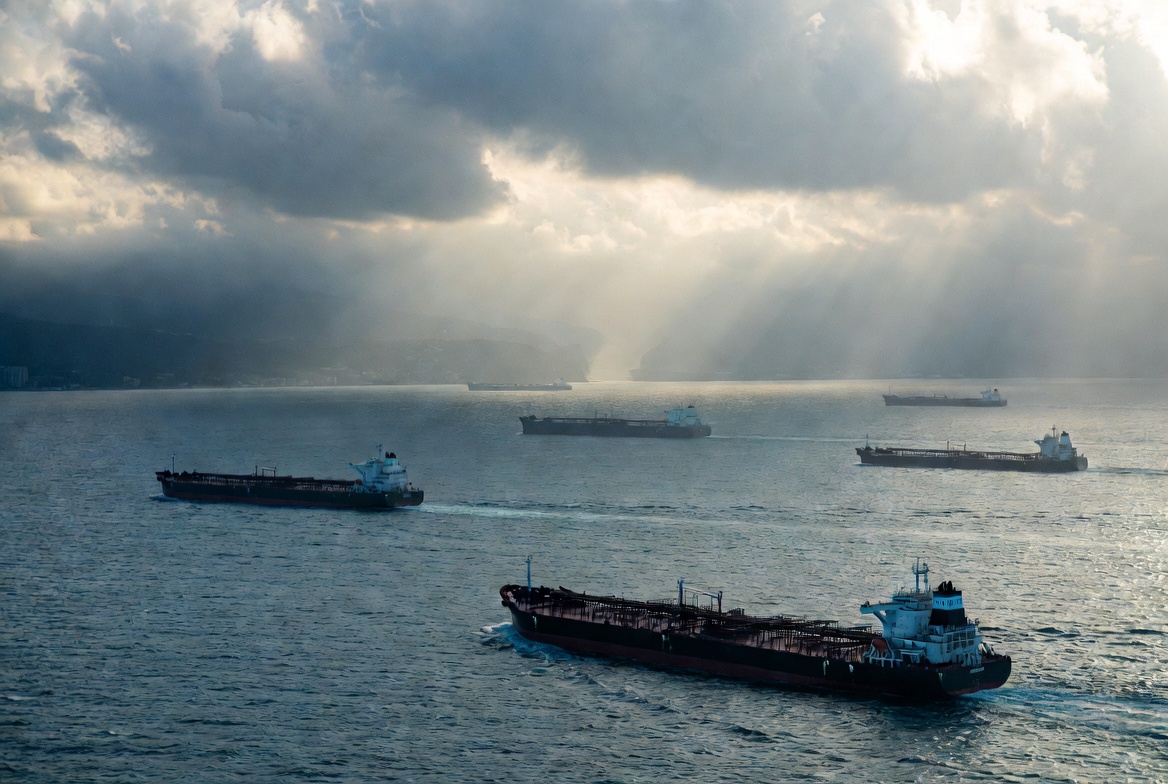
There is a special kind of historical poetry in watching a regional power that once presented itself as the indispensable guardian of the Gulf reduced to rerouting its own empty tankers around the Cape of Good Hope. Six Saudi-flagged supertankers, according to ship-tracking data this week, have turned away from the Gulf of Aden rather than risk the southern Red Sea. They sail south, not because of weather or markets, but because Yemen’s Houthis have decided that Saudi shipping is fair game. The irony is almost too neat to be accidental.
A decade ago the script ran the other way. In 2015 Riyadh assembled a coalition of Arab states, armed with advanced Western weaponry and the confident assumption of air superiority, to impose a blockade on Yemen and topple the Houthi authorities in Sana’a. The stated aims were clear: restore a pliant government, crush an Iranian-aligned movement, and reassert Saudi primacy on the Arabian Peninsula. The campaign produced a humanitarian catastrophe of famine, disease and displacement that the United Nations repeatedly described as one of the worst of the century. It did not, however, produce victory. The Houthis remained in control of large parts of the country, including the capital. The blockade that was meant to starve them into submission became a permanent feature of Yemeni life, while the Saudi-led coalition’s military objectives quietly evaporated into a grinding stalemate.
Fast-forward to 2026 and the roles have inverted with almost comic precision. The same Saudi state that once organised a coalition to enforce a blockade on Yemen is now, according to reports, seeking partners and pathways to lift a blockade that the Houthis have declared against it. London’s marine insurers have already widened the “high-risk” zone around Saudi waters. Empty tankers that once might have steamed unchallenged through Bab el-Mandeb now prefer the long way round Africa. The kingdom that spent years lecturing the world about the threat of Iranian proxies finds those same proxies dictating the routes of its own commercial fleet.
This is not merely a tactical setback. It is a strategic humiliation. Saudi Arabia’s entire post-2011 foreign policy rested on the premise that it could shape the region through a combination of money, arms and coalitions. The Yemen war was the most expensive demonstration of that premise. Its failure was already evident years ago; what we are witnessing now is the public confirmation that the failure has become structural. A state that cannot guarantee the safe passage of its own empty oil tankers through waters it once claimed to police has lost something more valuable than face. It has lost the ability to project power without looking vulnerable.
The tankers’ detour is therefore more than a logistical inconvenience measured in extra sailing days. It is a floating metaphor for a foreign policy that has come full circle: from the organiser of sieges to the object of one. History does not often deliver its judgments so cleanly. When it does, the least one can do is notice.