
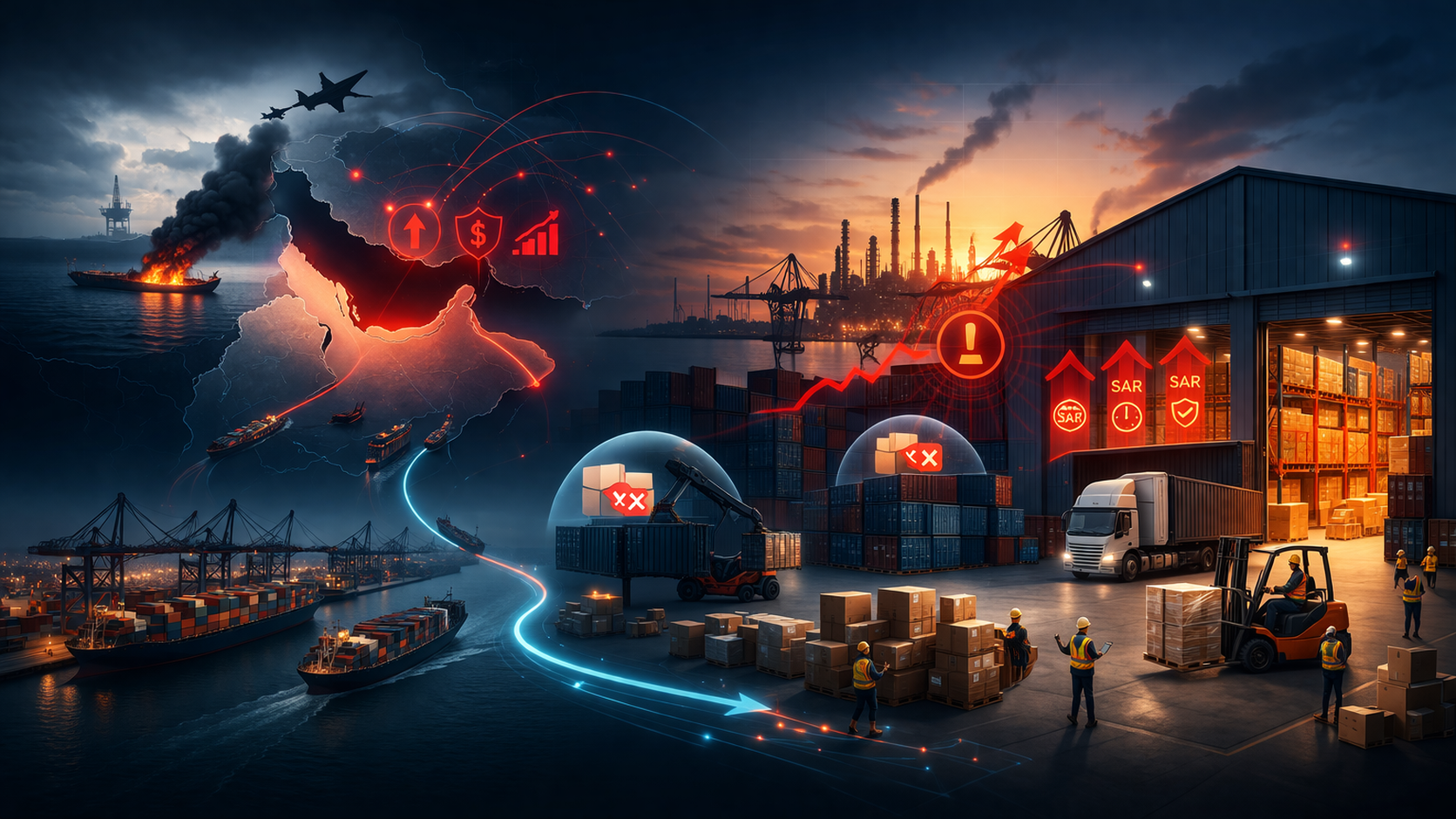
A growing storage crisis is affecting warehouses in Dammam and Jubail, as facilities increasingly shift from a purely operational role to a core tool of risk management.
The disruption stems from instability in the Strait of Hormuz linked to the ongoing US military campaign against Iran, which has severely impacted supply chains and export routes. This has had a direct knock-on effect on Saudi companies operating in the Eastern Province
The resulting dislocation has triggered acute storage shortages around ports and industrial cities. Exporters and importers alike are facing rising demand for additional warehouse capacity, driving up rental prices and placing mounting pressure on logistics infrastructure.
Drivers of demand among exporting companies include:
- continued production despite delays or stoppages in exports;
- accumulation of goods at factories and ports;
- higher shipping costs via alternative routes bypassing Hormuz;
- increased insurance premiums on shipments.
Among importing companies, demand is driven by:
- the need to secure larger buffer stocks over extended periods;
- concerns over delays or disruption to external supplies;
- hedging against future price volatility;
- stockpiling to capitalise on potential price increases.
Pressure is concentrated around key locations, including:
- King Abdulaziz Port in Dammam;
- Jubail Commercial Port;
- Ras Alkhair Port;
- Jubail Industrial City;
- Jubail Industrial City II;
- Ras Alkhair Industrial City;
- Dammam First Industrial City;
- Dammam Second Industrial City;
- Dammam Third Industrial City.
Affected companies are primarily active in:
- the food sector;
- petrochemicals;
- retail;
- manufacturing.
The crisis has also exposed several structural weaknesses, including:
- shortcomings in logistics infrastructure in the Eastern Province under Saudi administration;
- the absence of effective government contingency planning for infrastructure and logistics services;
- a failure by Saudi authorities to respond effectively to the disruption affecting the logistics market.
Amid these conditions, warehousing is no longer merely an operational function supporting day-to-day business activity, but has become a central instrument in risk management strategies.