
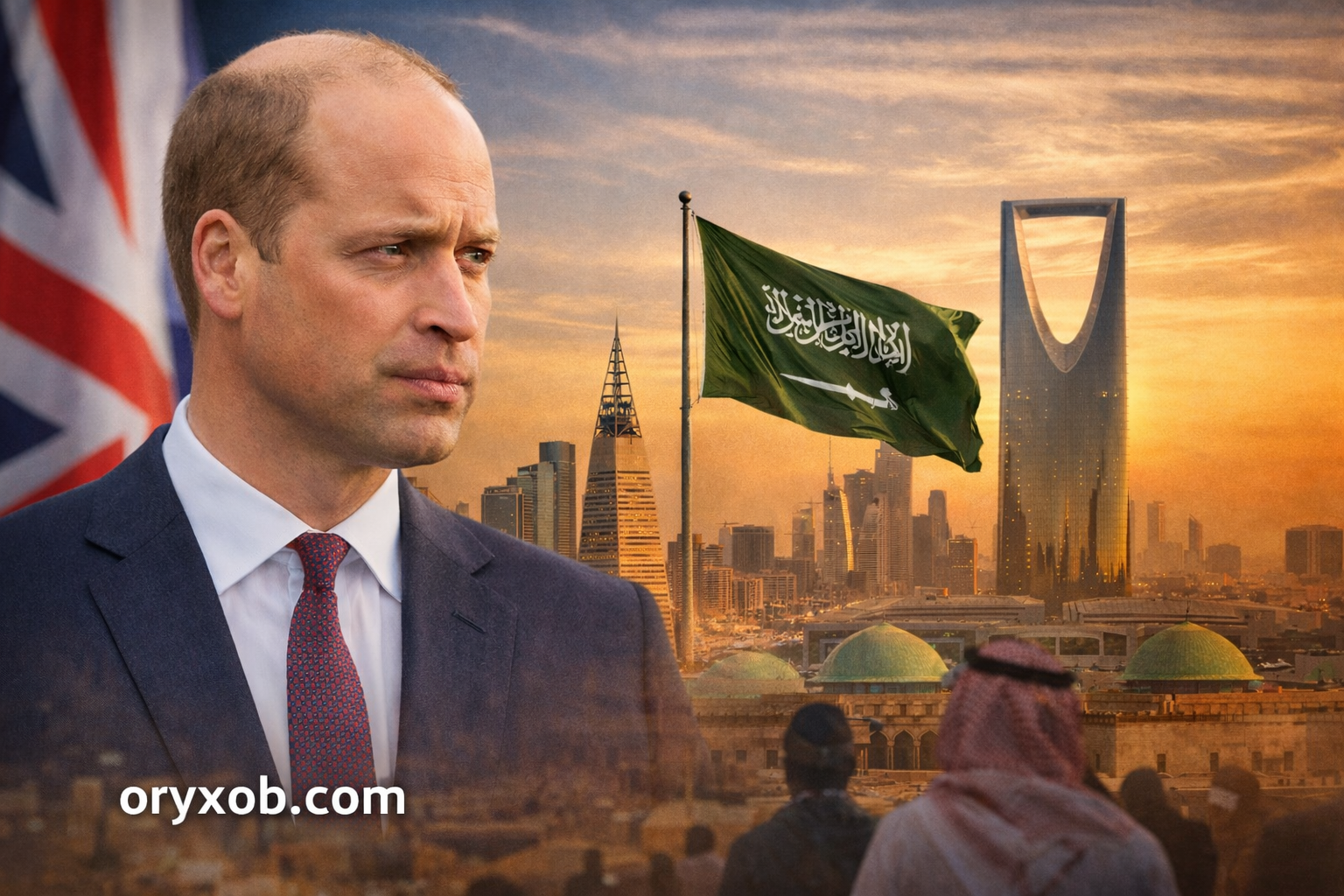
Riyadh / London — Prince William, Prince of Wales, is expected to visit Saudi Arabia later this month, in what will be his first official solo visit to the Kingdom. The planned trip, according to briefings from royal and diplomatic sources, is being presented as part of broader efforts to strengthen UK–Saudi cooperation on trade, energy and investment, while also marking nearly a century of diplomatic relations between the two countries.
A Visit with High Stakes
The anticipated agenda is expected to include meetings with senior Saudi officials, cultural engagements and participation in events linked to economic and strategic cooperation. Officials in London and Riyadh have framed the visit as a reflection of the longstanding relationship between the two states and the importance of continued dialogue amid shifting regional and global dynamics.
Supporters of the visit argue that engagement with Saudi Arabia remains a strategic necessity for the United Kingdom, particularly in areas such as energy security, regional stability and investment. Royal watchers have also suggested that the trip would signal Prince William’s expanding international role as heir to the throne, positioning him more visibly within the UK’s broader diplomatic architecture.
Objections and Public Criticism
Even before it takes place, the planned visit has attracted considerable criticism, particularly from human rights organisations and advocacy groups. Critics contend that a high-profile royal appearance in Riyadh risks being interpreted as political legitimisation of Saudi Arabia’s leadership at a time when serious human rights concerns remain unresolved.
Among the objections most frequently raised:
- Human rights advocates continue to highlight Saudi Arabia’s use of the death penalty, including in cases involving non-violent offences, alongside persistent restrictions on freedom of expression, association and political dissent.
- The killing of journalist Jamal Khashoggi in 2018 remains a defining issue for critics of Western engagement with Saudi Arabia. They argue that symbolic diplomatic gestures, if not accompanied by clear public accountability, undermine international human rights norms.
- Reports that families of prisoners facing execution have sought to draw attention to their cases ahead of the visit have added to concerns that humanitarian issues are being sidelined in favour of strategic and economic priorities.
For these critics, the visit exemplifies what they describe as a broader pattern in British foreign policy: the pursuit of commercial and geopolitical interests while human rights considerations are treated as secondary.
Engagement Versus Endorsement
Defenders of the planned visit maintain that continued dialogue offers greater leverage than disengagement. They point to social and cultural changes within Saudi Arabia in recent years — including expanded visibility for women in public life and a growing entertainment sector — as evidence that engagement can coincide with gradual reform.
Critics, however, argue that such developments do not address deeper structural issues, including limits on political participation, judicial transparency and freedom of expression. They warn against conflating social change with meaningful political reform.
A Test for British Diplomacy
As the visit approaches, it is increasingly viewed as a test of the UK’s diplomatic balancing act: reconciling strategic engagement with Saudi Arabia while responding to domestic and international pressure for a more values-driven foreign policy.
Whether Prince William’s presence will open space for substantive dialogue on contentious issues — or instead reinforce perceptions of unconditional partnership — is likely to shape how the visit is judged long after it concludes.
