
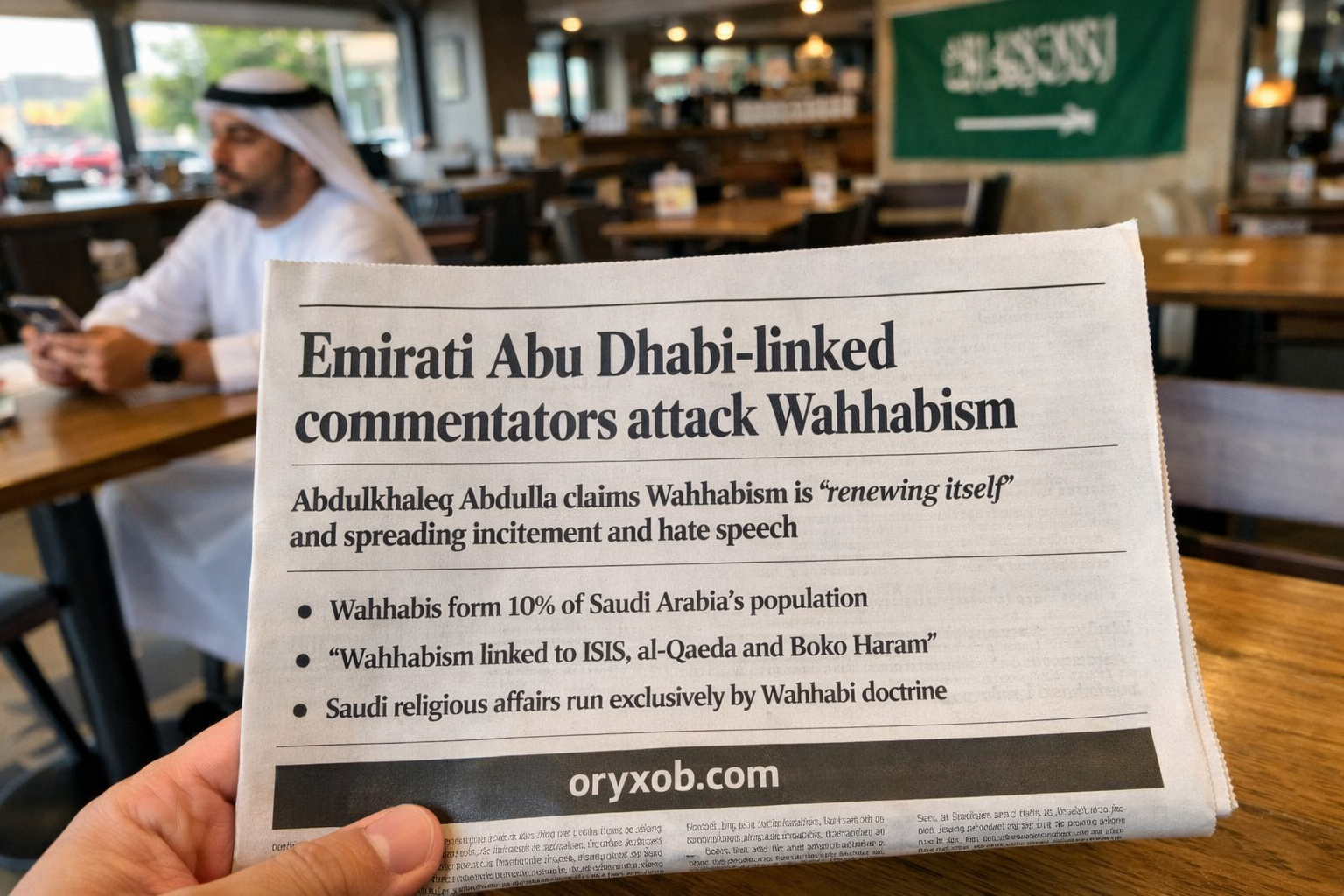
Emirati Abu Dhabi-linked commentators attack Wahhabism
Emirati commentators linked to the Abu Dhabi government have launched a public attack on Wahhabism, described as the official doctrine of the Saudi state. The Emirati criticism on X comes amid rising media tensions driven by the wider political strain between Saudi Arabia and the United Arab Emirates.
As one example — among others — Abdulkhaleq Abdulla, an adviser in the office of Mohammed bin Zayed, posted remarks on X criticising Wahhabism. This reference is provided as an illustration rather than an exhaustive list of similar Emirati commentary. In that post, Abdulkhaleq Abdulla said Wahhabism was finding space to “renew itself” and reassert its presence in both media discourse and politics, accusing it of driving incitement, hardline rhetoric, verbal hostility, offensive language and hate speech.

Wahhabis are a minority in Saudi Arabia and represent around 10 per cent of the population, according to unofficial estimates. Saudi Arabia comprises several Islamic sects and schools, including Shia, Sunni, Zaydi and Ismaili communities, among others. Wahhabism is smaller in number than many of these minorities, yet it derives disproportionate influence from its status as the state’s official doctrine.
Wahhabism and terrorism:
The name “Wahhabism” has been linked to terrorism on the grounds that terrorist organisations worldwide are said to adhere exclusively to Wahhabi ideology, including ISIS, al-Qaeda, Boko Haram and others.
Wahhabism in Saudi Arabia:
Wahhabism is imposed through state power across broad areas of public life, including schools, curricula, universities, religious rulings, media, and printing and publishing, among other sectors. Although the Two Holy Mosques in Mecca and Medina are sites for Muslims worldwide, their administration, sermons, prayer leadership and religious affairs are run exclusively in line with Wahhabi doctrine. This remains the case despite the fact that the Hejaz — the original population of the Mecca and Medina region — does not follow Wahhabism, with the majority being Sunni alongside a Shia minority.
Wahhabism in recent years:
Since Mohammed bin Salman’s rise to power, some of his decisions appeared to point towards a trajectory that could have significantly constrained Wahhabism. However, developments on the ground — and the Emirati campaign warning of a perceived rise in Wahhabism — suggest the opposite.