
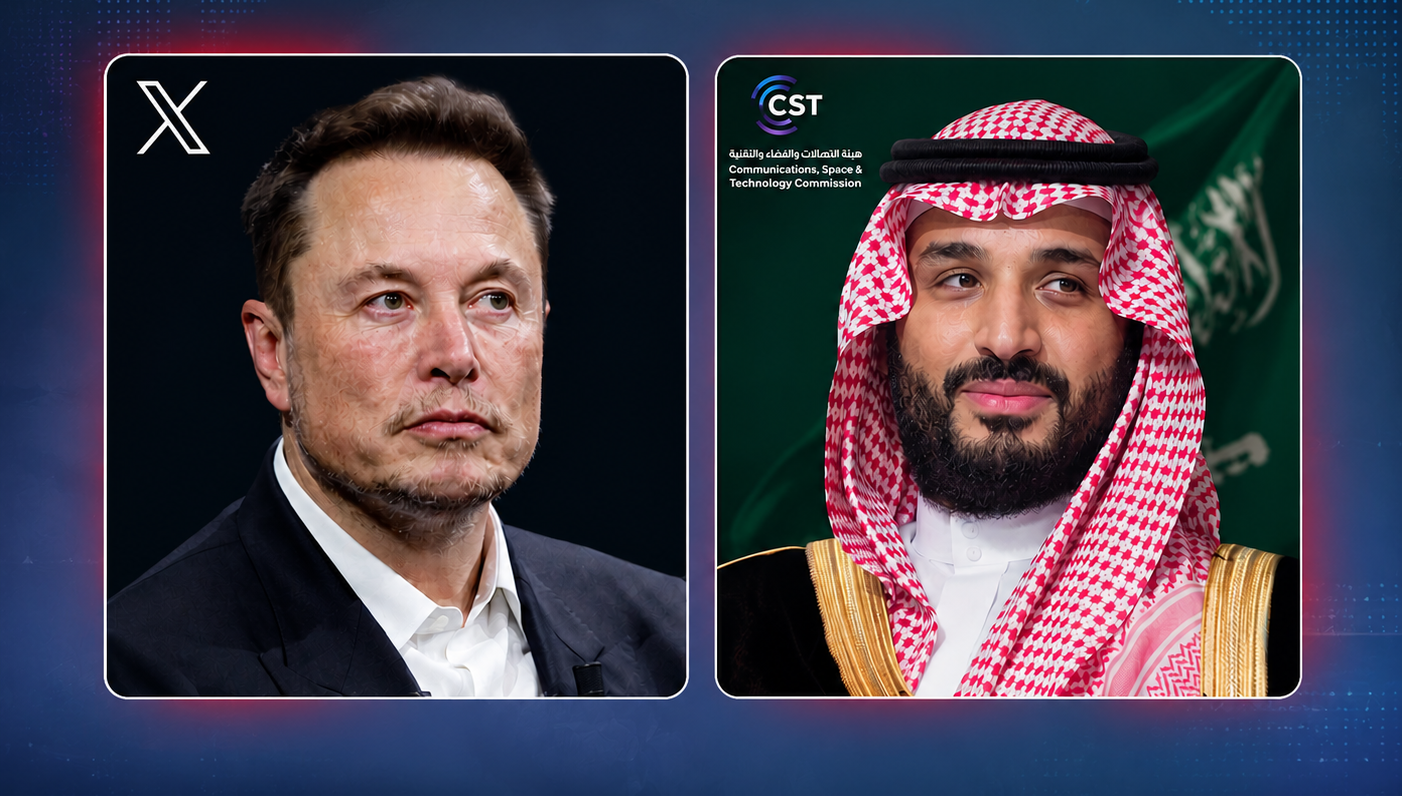
X, the platform owned by Elon Musk, has sent notices to several accounts posting content critical of the Saudi regime, stating:
“We have received a request from the Communications, Space and Technology Commission in Saudi Arabia to withhold your account in Saudi Arabia on the grounds that it violates local laws.”
So what did Elon Musk do?
▪️ First: He forced Saudi Arabia to submit formal, written censorship requests, instead of the verbal demands it had long pushed through unofficial influence behind closed doors.
▪️ Then: He forwarded those requests to the targeted account holders, exposing the level of thinking and mentality within the Saudi regime, which fears even small and marginal X accounts.
▪️ As a result: He revealed and exposed Mohammed bin Salman’s mindset, and the degree of expression the Saudi leadership fears and feels threatened by.
What did X’s messages to the targeted account holders include?
▪️ X believes in defending and respecting the voices of its users.
▪️ We want to give you the opportunity to evaluate the Saudi request.
▪️ You may take appropriate action to protect your interests if you wish.
▪️ Such action may include consulting a lawyer and challenging the request before the courts.
▪️ It may also include contacting relevant civil society organisations.
Through the points raised in its message, X effectively completed the “demolition” of the Saudi regime’s backward and reactionary mentality by encouraging account holders to take steps that would further embarrass the authorities.
It should be noted that notifying users of such requests is standard practice for all governments that seek account restrictions. However, Saudi Arabia has stood out in practice for the sheer volume of requests it submits, including against obscure and little-known accounts.
Does Elon Musk truly believe in freedom of expression?
He does not believe in it as a fixed principle. Rather, he approaches it through the lens of personal interests and material gain. What he is doing with Saudi Arabia — or with others — goes no further than a marketing exercise designed to secure political or economic advantages for himself, even if, unintentionally, this occasionally aligns with the interests or agendas of other parties.