
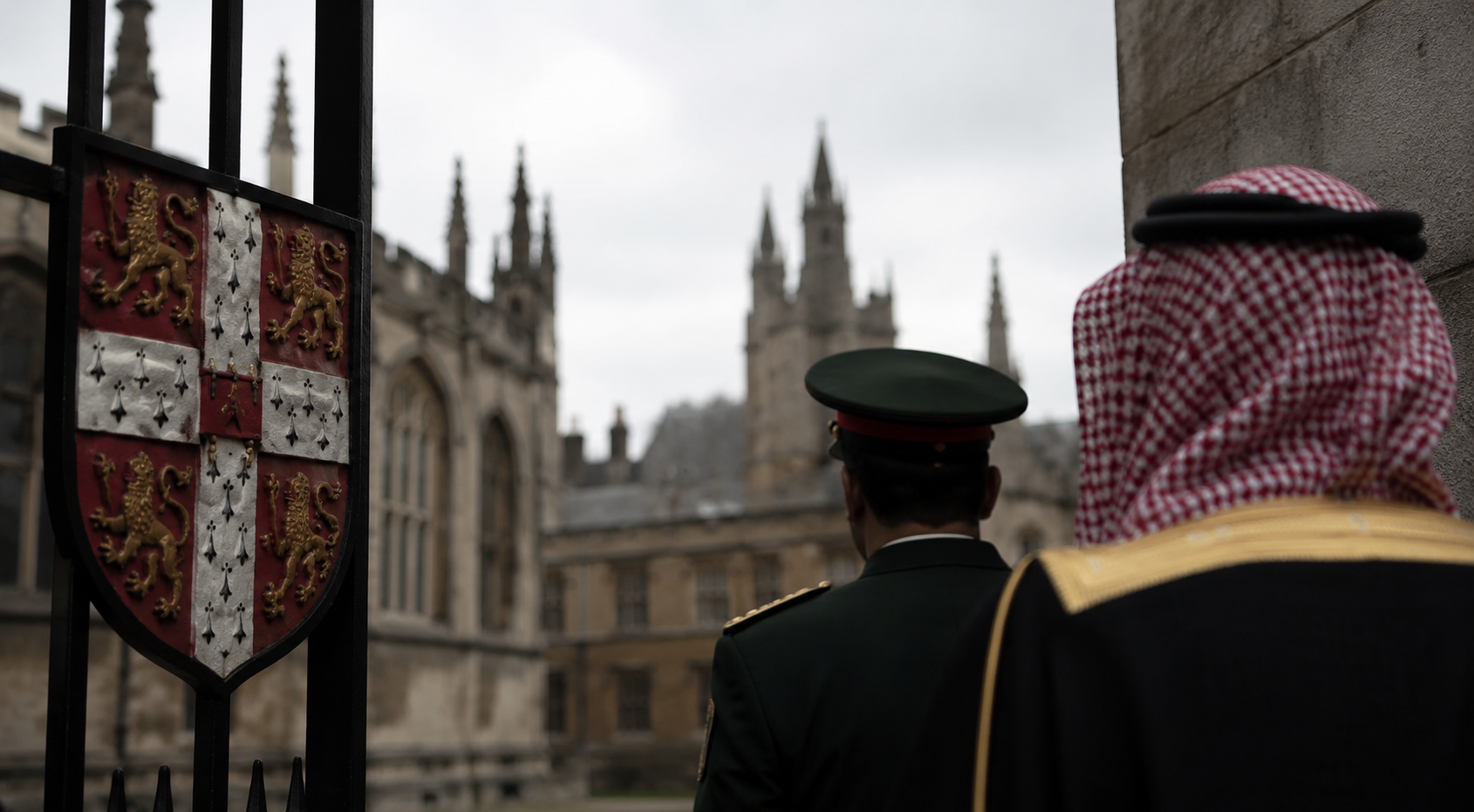
Cambridge University is facing criticism after The Guardian revealed that its Judge Business School sought approval for a proposed partnership with Saudi Arabia’s Ministry of Defence, despite serious concerns over Riyadh’s human rights record and the kingdom’s role in regional conflicts.
According to documents seen by The Guardian, the business school asked to enter into a memorandum of understanding with the Saudi defence ministry to provide services and training in areas including executive education, innovation management, leadership development and healthcare administration strategy. The proposed work would reportedly be limited to the ministry’s civilian administration.
The proposal was approved in principle by Cambridge’s committee on benefactions and external and legal affairs in January, although any future contracts would still require separate scrutiny. The committee, chaired by vice-chancellor Prof Deborah Prentice, reportedly acknowledged reputational risks, including concerns over the Saudi government’s human rights record, climate policies and the university’s ability to protect academic freedom for staff involved in the work.
The plan has provoked anger among senior academics, who warned that a partnership with a Saudi state body linked to the kingdom’s security establishment would compromise Cambridge’s stated commitments to freedom of expression, non-discrimination and academic independence. One senior academic quoted by The Guardian described the proposal as “horrifying” and a betrayal of the university’s values.
Critics say the proposed arrangement reflects a wider pattern in which prestigious Western institutions lend legitimacy to authoritarian governments in exchange for lucrative consultancy and training contracts. Saudi Arabia, under Crown Prince Mohammed bin Salman, has invested heavily in international partnerships designed to project reform and modernisation, while rights groups continue to document repression, arbitrary detention and restrictions on dissent.
Cambridge Judge Business School said no memorandum of understanding had been signed. Supporters of the proposal argued that engagement would be confined to civilian functions and could create an opportunity to encourage positive change within the Saudi government. But opponents say such assurances do little to address the political reality of dealing with a ministry embedded in an authoritarian state.
The controversy also comes amid broader scrutiny of UK universities’ financial relationships with foreign governments and defence-linked institutions. For Saudi dissidents and critics of the kingdom, the Cambridge case is likely to reinforce concerns that elite British institutions are helping launder the image of a government accused of silencing critics at home and abroad.