
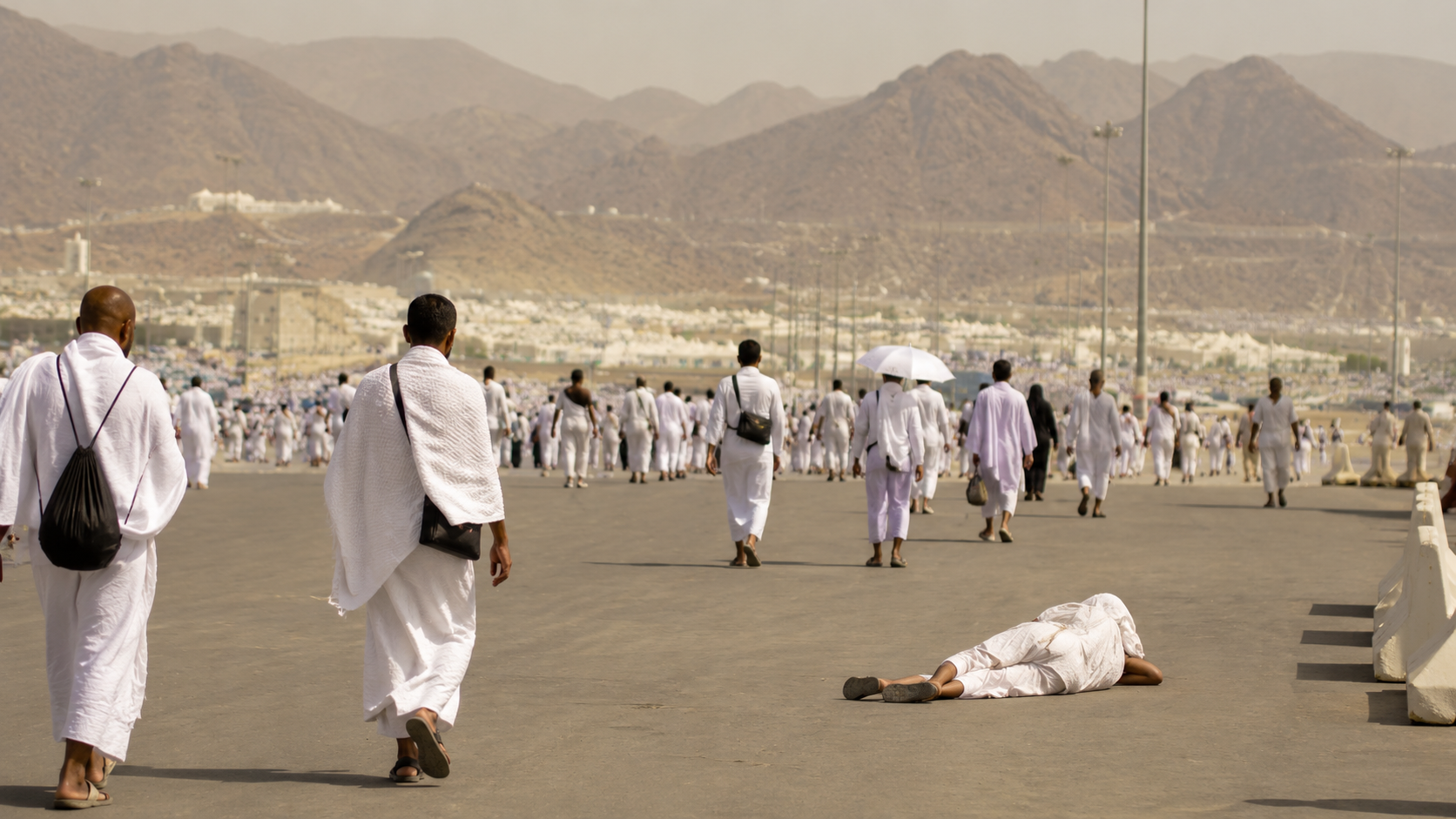
Even before the official start of this year’s Hajj, reports of pilgrim deaths have already raised serious questions about Saudi Arabia’s handling of the pilgrimage and the silence surrounding its human cost.
Around 40 pilgrims are understood to have died in Saudi Arabia ahead of the Hajj season, including 20 pilgrims from Indonesia. These early deaths should have prompted a clear public response from the Saudi authorities and serious coverage by Saudi media. Instead, the familiar pattern has continued: limited transparency, little scrutiny and an official silence that treats the deaths of pilgrims as a matter to be managed quietly rather than acknowledged openly.
This silence is not a minor failure of communication. It is a sign of disrespect towards the dead and their families. It also suggests that the Saudi authorities have no serious intention of confronting the repeated failures that place vulnerable pilgrims at risk year after year.
The latest deaths cannot be viewed in isolation. They come after the catastrophe of the 2024 Hajj, when more than 1,000 pilgrims died during the pilgrimage, many of them in extreme heat. According to figures reported at the time by several countries, at least 1,114 pilgrims died. The largest number of reported deaths came from Egypt, where security and medical sources said 672 Egyptians had died, with 25 others missing. Indonesia reported 236 deaths, while India said 98 Indian citizens had died. Further deaths were reported by Tunisia, Jordan, Iran and Senegal.
Saudi officials later said that many of those who died in 2024 were unregistered pilgrims who lacked access to vital services such as air-conditioned buses and cooling tents. But that explanation does not absolve the authorities. Anyone present in the holy sites and facing a life-threatening emergency should receive protection, regardless of paperwork or permit status.
The Saudi health minister later said that 1,301 people had died during the 2024 Hajj and that 83 per cent of the fatalities were among unregistered pilgrims. He also acknowledged that many had walked long distances under direct sunlight without adequate shelter or comfort.
Those admissions raise questions that remain unanswered today. If the danger was known, why were more shelters, water points, medical teams and emergency routes not available? Why was the public not given a full and transparent accounting of the death toll? Why did families have to rely on foreign ministries, diplomats and international news agencies for information about their loved ones?
The silence of the Saudi press compounds the injustice. A media system that avoids asking who died, where they died, why they died and who is responsible is not protecting national dignity. It is protecting officials from scrutiny.
Respect for the dead requires truth. Respect for their families requires transparency. And respect for the sanctity of Hajj requires a serious plan to ensure such deaths are not repeated.
Saudi Arabia has the financial resources, infrastructure capacity and administrative power to do far better. What is lacking is not capability, but accountability. Until the authorities publicly acknowledge the scale of pilgrim deaths and allow open scrutiny of the failures behind them, their silence will remain part of the scandal.