
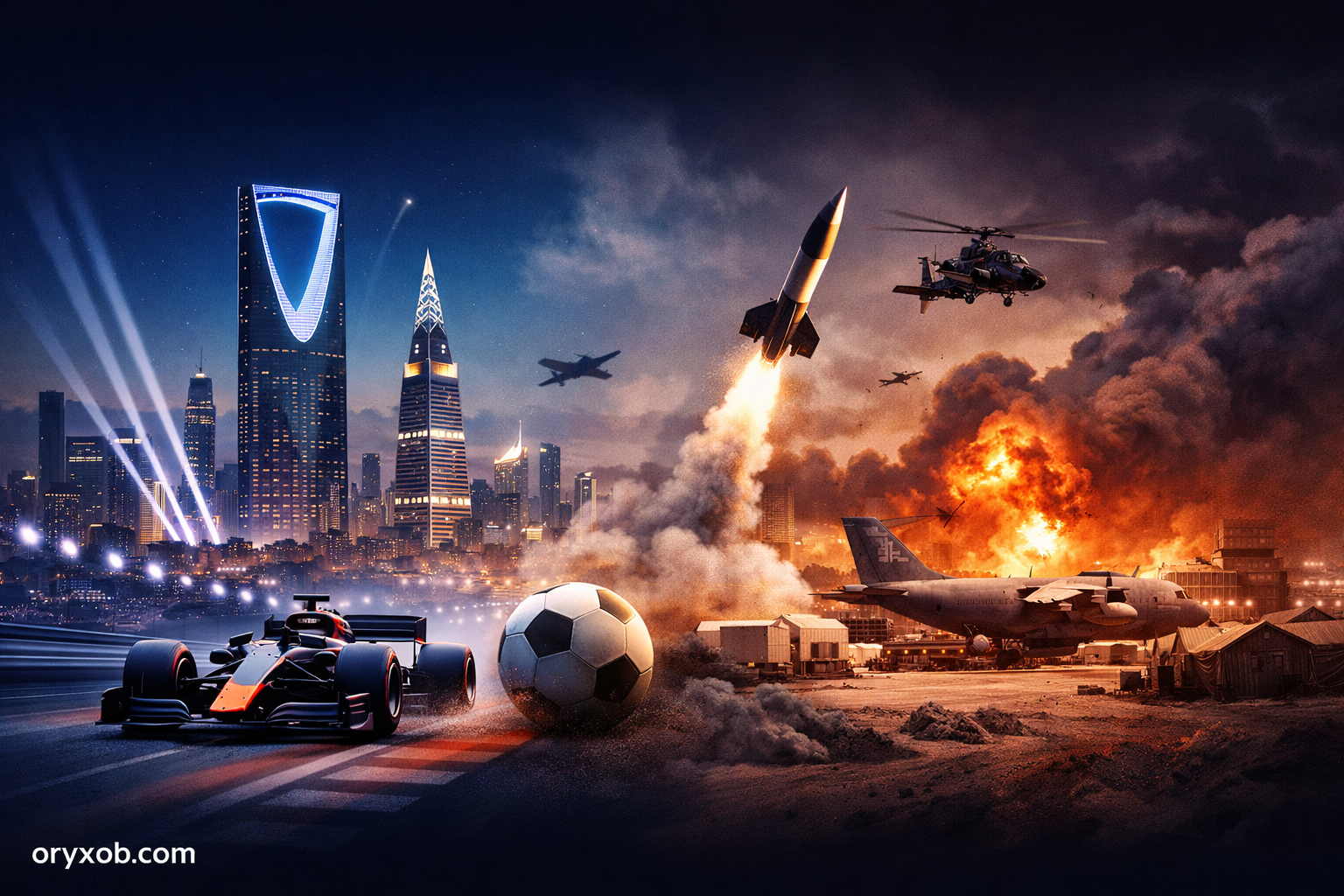
Saudi Arabia’s sports machine was sold to the world as proof of “stability”: flood the calendar with marquee events, fly in celebrities, point cameras at the skyline, and insist the kingdom has become a safe, modern hub. Then the war arrived — and the first thing to leave wasn’t an investor, or a minister, or a public-relations slogan. It was the sport.
Take the Tom Brady–Fanatics flag football showcase, built as a glossy Riyadh spectacle with a broadcast plan and a celebrity host. It is now being reported as likely moving to the United States because the region has become a battlefield and travel restrictions are biting. The organisers are trying to keep the date, keep the cameras, keep the hype — just not the venue. That is the sound of “Vision” meeting reality: the show must go on, but it no longer has to be in Saudi Arabia.
This is not an isolated inconvenience. It is a pattern that exposes what the kingdom’s sportswashing project always tried to hide: Saudi Arabia can buy events, but it cannot buy security — especially after Crown Prince Mohammed bin Salman dragged the country closer to the front line of a war it did not need.
The al-Kharj boomerang: when war infrastructure comes home
Bin Salman’s defenders will insist Saudi Arabia is merely “an ally”, a “partner”, a “friend” — as if those words are a shield against missiles. Yet the kingdom hosts a major U.S. military presence at Prince Sultan Air Base, near al-Kharj. Satellite imagery published before the strikes showed a sharp increase in U.S. support aircraft at the base as Washington built up forces amid tensions with Iran.
Whatever Saudi officials say in public, the effect is unmistakable: when you host the machinery of war, you become part of the map of war. And as the conflict spread, Saudi Arabia faced incoming threats near al-Kharj, while officials and regional reporting described interceptions around that area — a grim footnote to Riyadh’s insistence that it can have the benefits of hosting foreign power without the costs.

Bin Salman owns that choice. He can pretend he was forced, that geography is destiny, that great powers decide and smaller states comply. But he has built his entire rule on the claim that he alone decides — that he is the indispensable strategist. If that is the brand, then the blowback is also his.
Sport can’t be staged in an air-raid warning
This is why the sports calendar is now wobbling. Mega-events thrive on predictability: flights land, teams travel, broadcasters roll in, sponsors entertain. War destroys that ecosystem in days.
Airlines cancelled and suspended flights to and from Riyadh and other Saudi cities amid the conflict, ripping up schedules and leaving travellers stranded. That is not a “PR problem”; it is operational collapse. You cannot host the world while the world cannot reliably get in or out.
Across the region, major competitions were postponed or thrown into doubt — a preview of what awaits any Saudi event that depends on international travel and a sense of safety. Reporting catalogued cancellations and disruptions ranging from a tennis event in the UAE being called off after a security alert, to football competitions being suspended and travel delays affecting athletes trying to reach tournaments abroad.
Motorsport — one of Saudi Arabia’s most expensive vanity projects — also faced the same cliff edge. The World Endurance Championship postponed its season opener in Qatar, and Formula One’s Bahrain and Saudi races came under scrutiny, with talk of replacement venues in Europe if the Gulf rounds became untenable. Saudi Arabia’s race in Jeddah was supposed to be a global billboard. Instead, it was discussed as a date that might need a substitute circuit.
Football, too, felt the shock. The Asian Football Confederation postponed Asian Champions League fixtures in the region, directly affecting clubs and schedules that Saudi Arabia has tried to turn into a continental marketing platform.
This is what sportswashing looks like when the lights go out: not moral reckoning, not reform — just relocation.
The deeper failure: inexperience dressed up as destiny
Bin Salman came to power with no governing track record and no strategic depth — only the confidence of a man who has never had to pay personally for a wrong decision. He centralised authority, sidelined institutions, and treated statecraft like a start-up pitch deck: move fast, break norms, silence critics, hire consultants, announce a “transformation”.
But geopolitics is not a concert. You cannot buy a ceasefire with a sponsorship deal. You cannot drown out missiles with fireworks. And you cannot build “stability” on top of a security posture that invites retaliation, then act surprised when the bill arrives.
The kingdom’s sports agenda was never primarily about sport. It was about reputation laundering: a rolling sequence of spectacles designed to crowd out the headlines on political prisoners, repression, and an absence of accountability. Yet war has a way of stripping the paint. When the risk rises, the athletes, broadcasters, and brands do what they always do: protect themselves first. Saudi Arabia’s rulers can spend billions to rent glamour — but they cannot force the world to pretend it feels safe.
So yes, the American war on Iran is exporting sports events away from Saudi Arabia. But the more uncomfortable truth is this: bin Salman helped make the kingdom a more plausible target by tying it tighter to U.S. military posture, and he is now watching his own sportswashing circus buckle under the very insecurity he helped invite.
A regime that sells itself as the future should not be pleading for events to stay while they quietly pack their bags.