
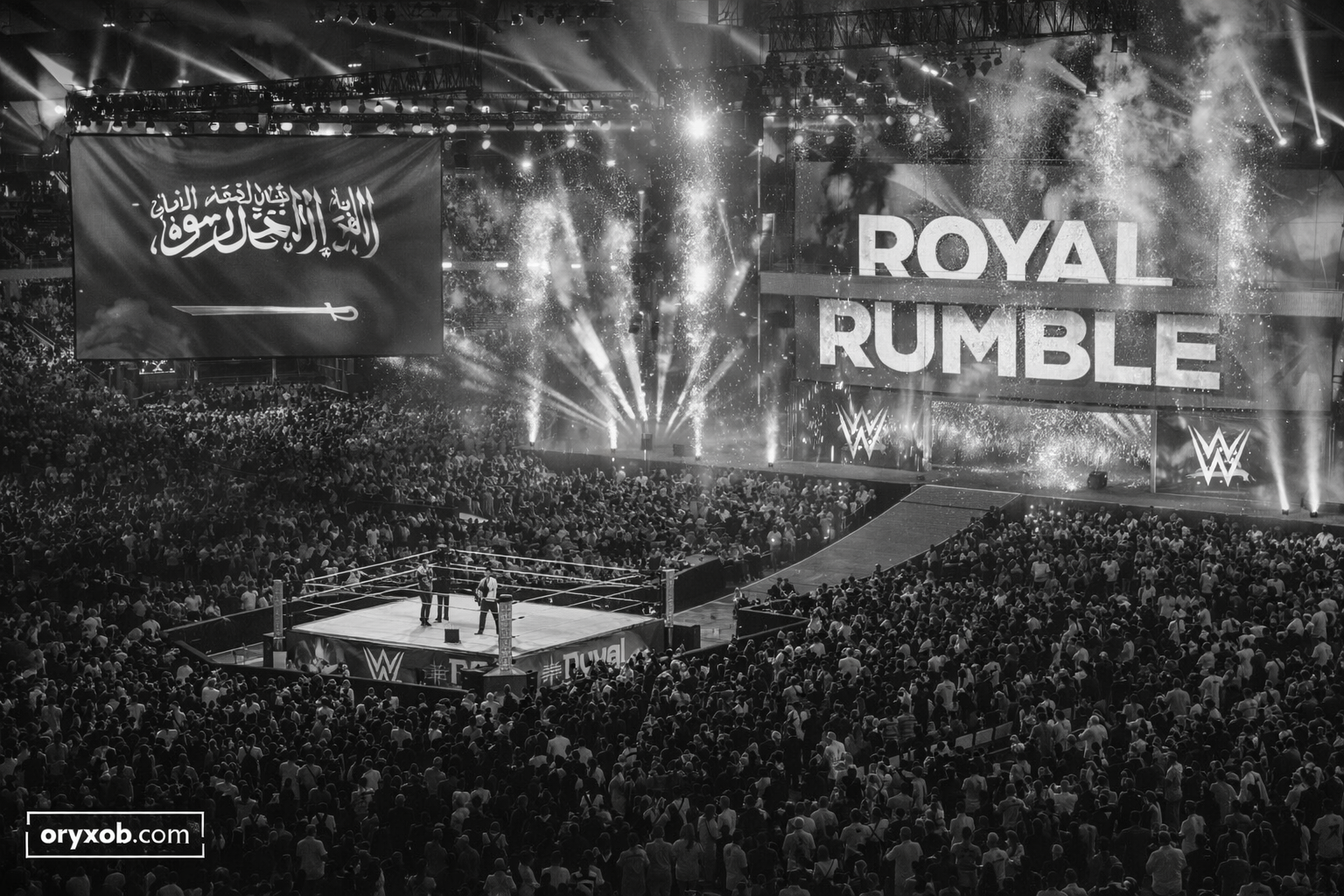
Saudi Arabia’s push to rebrand itself through high-profile entertainment has come under renewed scrutiny after conflicting reports over how much the kingdom paid to stage WWE’s Royal Rumble in Riyadh — with figures ranging from roughly $55 million to claims of a $100 million-plus payment package.
The Royal Rumble, one of WWE’s flagship events, was held in Riyadh on 31 January as part of “Riyadh Season”, the state-led festival overseen by the General Entertainment Authority. It marked a major escalation of WWE’s long-running partnership with the kingdom, which has relied on Saudi funding to bring premium events to the country since 2018.
In the days leading up to the show, industry outlets cited internal discussions at WWE and claimed Saudi officials had made a “massive investment” for the event, with some reporting that the kingdom was paying an additional $100 million on top of the existing arrangement. Those claims fed widespread criticism that Riyadh was effectively purchasing the prestige of a global sports brand as part of a broader image-management campaign.
But more recent reporting tied to TKO Group Holdings — WWE’s parent company — pointed to a lower figure. According to accounts of TKO’s latest earnings call, company executives indicated the Royal Rumble brought in the same level of “site fee” as previous Saudi events, around $55 million. That would still be an extraordinary sum for a single night’s entertainment, but it also exposes the opacity that surrounds Saudi spending: even the basic price of hosting is now unclear, with the public left to piece together the bill from corporate comments and leaks.
That lack of transparency has become part of the story. On the same investor call, TKO leadership reportedly argued that “site fees” no longer captures the full scope of what host governments provide, suggesting a shift towards describing broader “financial incentive packages”. In Saudi Arabia’s case, that language matters: packages can include everything from production budgets and venue build-outs to marketing guarantees — and, crucially, payments routed through intermediaries whose commissions are rarely disclosed in any public accounting.
The political logic is familiar. Riyadh pours public money into imported spectacles that generate global headlines and glossy television images, while political prisoners, peaceful activists, and independent voices remain targets of repression at home. The aim is not simply tourism. It is narrative control: substituting fireworks, celebrity appearances, and stadium shots for any serious reckoning with the kingdom’s human-rights record and authoritarian governance.
For Saudi citizens, the unanswered question is why such decisions — and such sums — can be committed without oversight, tendering transparency, or meaningful public debate. Whether the true cost of the Royal Rumble was $55 million, $100 million, or more, the model is the same: a closed political system spending vast public resources to buy cultural legitimacy abroad, while accountability is treated as optional at home.