
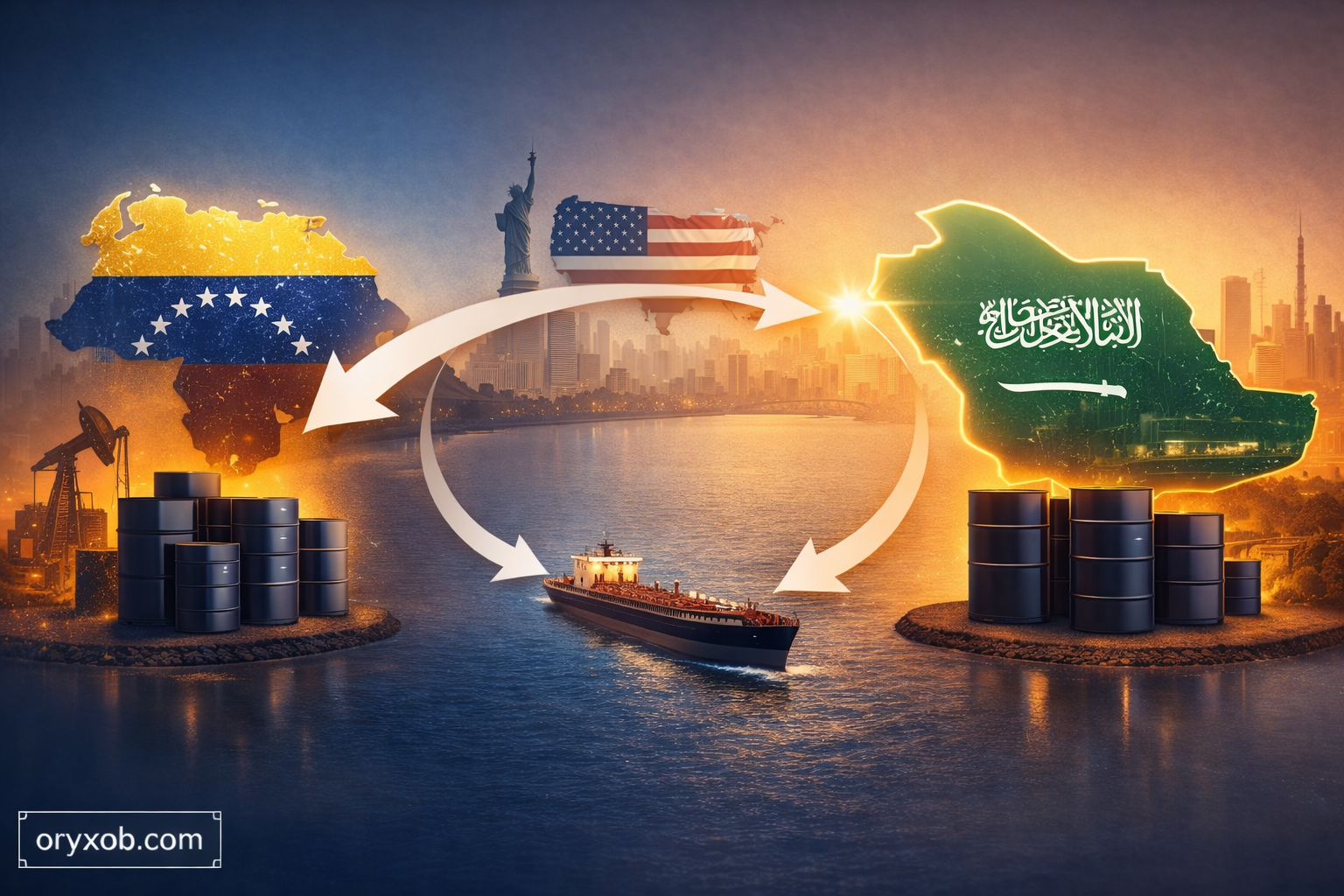
Saudi Arabia has purchased a cargo of Venezuelan heavy crude routed through the United States, a move that is drawing scrutiny given the extraordinary political circumstances surrounding Venezuela’s leadership and oil sector.
The cargo of Boscan heavy crude was acquired by Motiva Enterprises, the Houston-based refinery operator wholly owned by Saudi Aramco, for delivery in March. The transaction follows Washington’s intervention in Venezuela earlier this year and the subsequent detention of President Nicolás Maduro in the United States — a development that has triggered intense international controversy.
Since the US operation and the expansion of American licensing control over Venezuelan oil exports, significant volumes of the country’s crude have effectively moved under US-supervised frameworks. Supporters in Washington describe the arrangement as lawful enforcement of sanctions policy. However, critics argue that Venezuela’s oil sector is now operating under external coercion, with its elected president detained in the very country facilitating the sale of its crude.
Against that backdrop, Saudi Arabia’s decision to purchase Venezuelan oil via US channels raises difficult questions. Observers note that the Kingdom is one of the world’s largest crude exporters, possessing vast reserves of its own. The commercial necessity of sourcing politically charged Venezuelan barrels is therefore open to debate.
Some regional analysts suggest the purchase may reflect a desire in Riyadh to remain closely aligned with President Donald Trump’s foreign policy recalibration towards Caracas. Others argue that buying oil from a country whose head of state is imprisoned in the purchasing intermediary’s jurisdiction risks placing Saudi Arabia on uncertain moral and diplomatic ground.
The episode underscores a broader tension in global energy politics: whether commercial pragmatism can be cleanly separated from contested sovereignty. For Riyadh, which frequently invokes principles of non-interference and respect for state authority, participation in this supply chain may prove politically awkward — particularly as questions persist over who legitimately controls Venezuela’s oil wealth.