
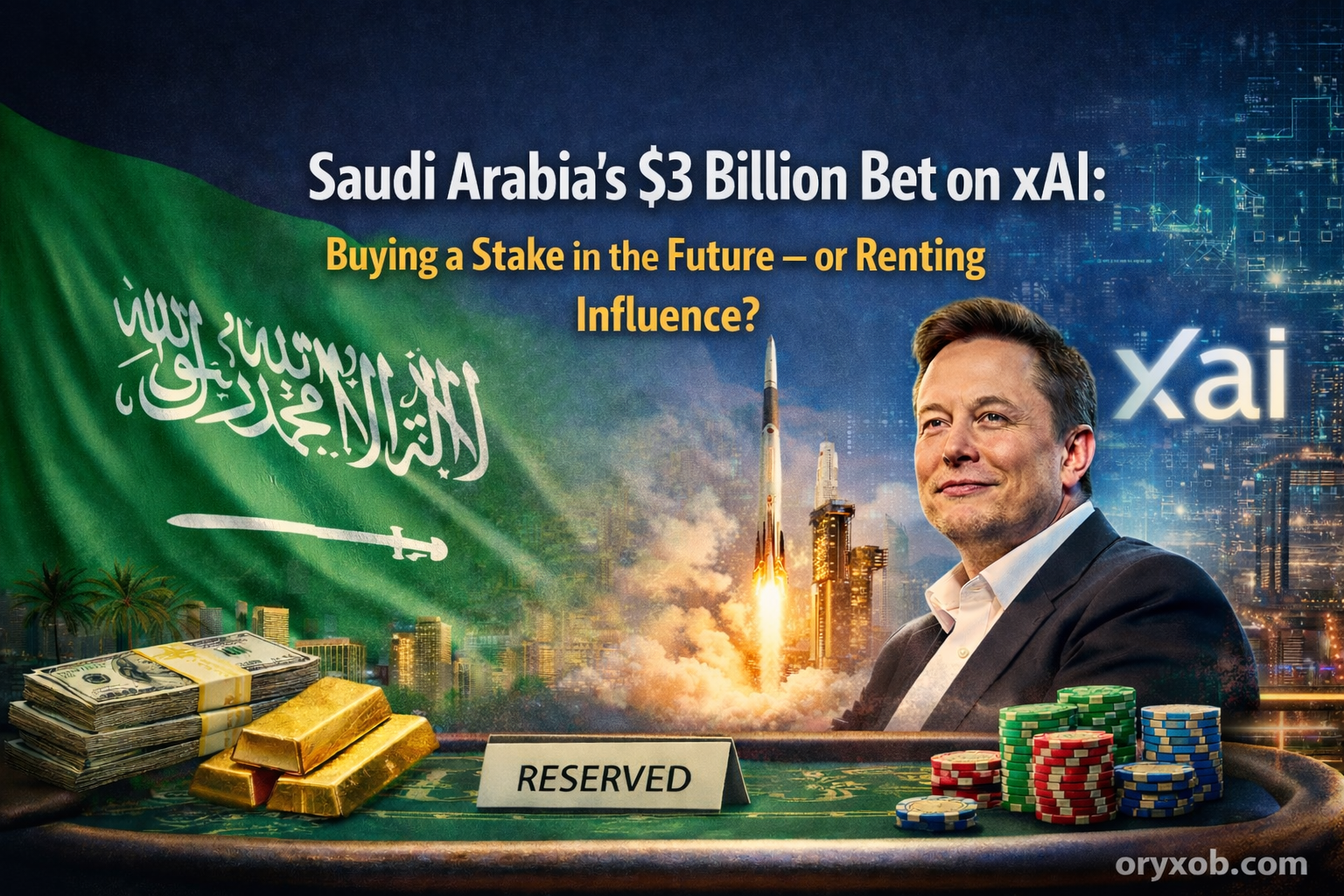
Saudi Arabia’s $3 billion investment in Elon Musk’s xAI might appear, at first glance, like a bold step into the technological future. Artificial intelligence is the new oil, we are told. The Kingdom must diversify. Vision demands scale. Capital must flow where the future is being written.
Yet beneath the headline-grabbing figure lies a familiar pattern: an oil-rich state purchasing proximity to power rather than building sovereignty over it.
The investment, made via Humain into xAI’s Series E round, effectively transformed into equity in SpaceX following corporate restructuring. In other words, Saudi capital bought a stake in an ecosystem firmly controlled elsewhere. Governance remains American. Intellectual property remains American. Strategic direction remains American. Saudi Arabia supplies capital; others retain command.
This is not technological independence. It is financial participation.
For a country that speaks relentlessly about becoming a global AI hub, the more pressing question is this: where is the domestic research breakthrough? Where are the Saudi-trained AI architects? Where are the indigenous large language models competing globally? A $3 billion cheque does not substitute for an ecosystem.
The symbolism is telling. Rather than anchoring funds into Saudi universities, start-ups, and open research platforms, capital is exported into a private company orbiting one of the most powerful corporate figures on the planet. The Kingdom has effectively bought a premium seat at someone else’s table — but it is not hosting the dinner.
There is also a deeper irony. Artificial intelligence represents autonomy, data sovereignty, and algorithmic control. Yet by tying its ambitions to foreign corporate structures, Riyadh risks reinforcing dependency in the very sector it claims will secure independence from oil.
This is not diversification; it is diversification by proxy.
One could argue that such investments buy strategic alliances and technological access. Perhaps. But minority equity does not guarantee knowledge transfer. Nor does it ensure that the next transformative AI breakthrough will be coded in Riyadh rather than Silicon Valley.
Saudi Arabia does not lack money. It lacks institutional patience. Building a genuine AI ecosystem requires slow capital, regulatory transparency, academic freedom, and tolerance for failure — none of which can be acquired through high-profile funding rounds.
The spectacle of writing multibillion-dollar cheques to American tech titans may satisfy short-term optics. It produces impressive press releases. It signals ambition.
But ambition without architecture is theatre.
If the Kingdom wishes to lead in artificial intelligence, it must invest not merely in companies, but in conditions: independent research, data governance frameworks, legal reform, and human capital. Otherwise, it risks repeating the same pattern that defined the oil era — exporting wealth in exchange for external expertise.
Saudi Arabia has purchased exposure to AI. Whether it has purchased influence is another matter entirely.
The future cannot simply be bought. It must be built.