
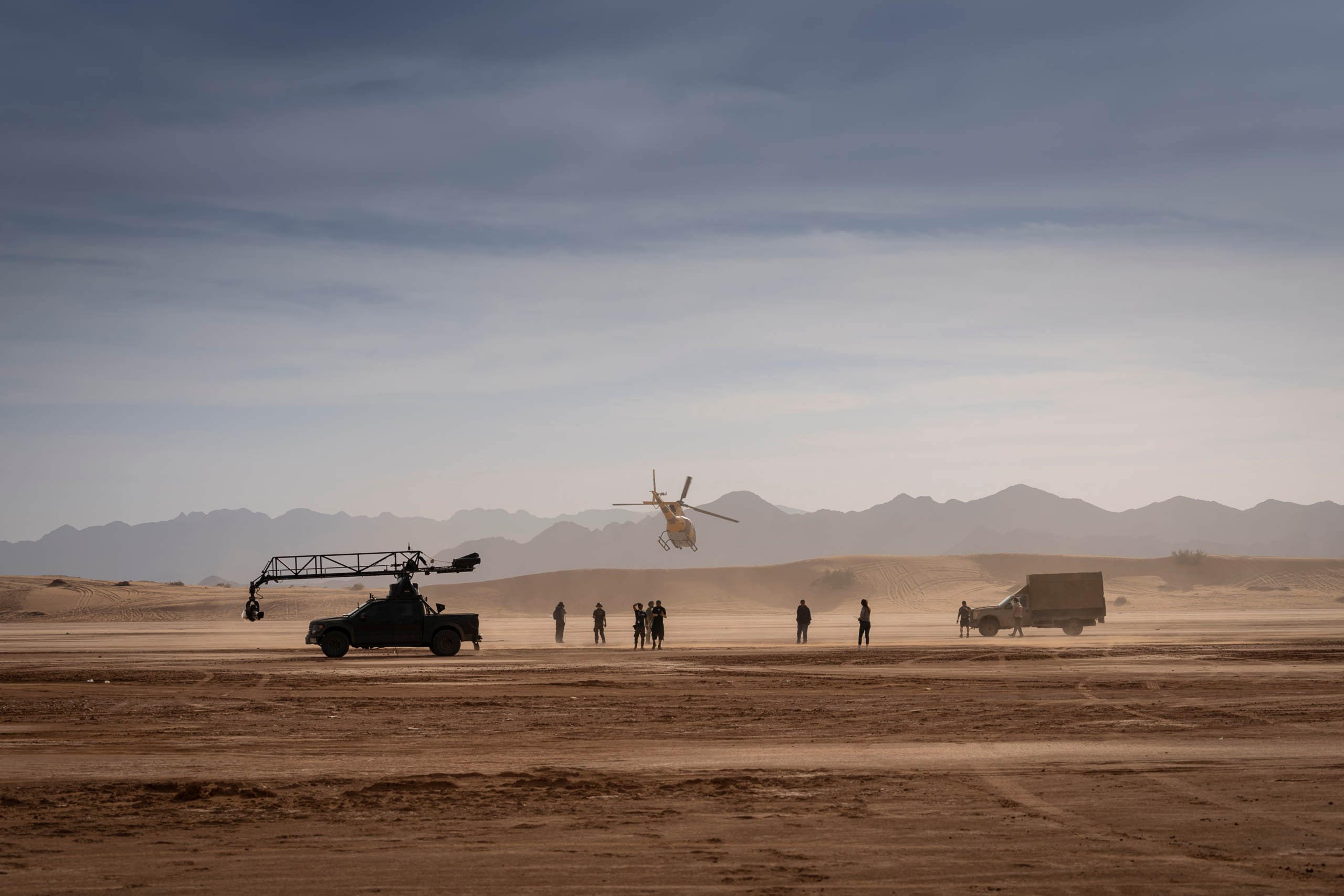
When an expensive historical epic struggles for years to reach the screen and then suddenly secures Western distribution, the story is rarely just about cinema. The recent acquisition of Desert Warrior for theatrical release in the United States and the United Kingdom should be read in precisely that light: not merely as a commercial transaction, but as a cultural moment shaped by geopolitics.
On its surface, the film is an English-language historical action drama set in seventh-century Arabia. A fugitive princess resists imperial domination, traverses the desert, and rallies disparate tribes into a unified force. It is a familiar narrative arc: unity forged in adversity; identity consolidated through struggle; history reimagined as destiny. Such myth-making is hardly unusual in national cinemas. What is unusual is the strategic ecosystem in which this particular project was conceived, financed and ultimately exported.
Saudi Arabia has, over the past several years, invested heavily in positioning itself as a global entertainment hub. Through its sovereign wealth structures, it has channelled vast sums into media, gaming, sport and film. The Public Investment Fund has expanded its footprint across international entertainment assets. State-linked entities have taken major stakes in regional media groups. New production incentives offer generous rebates to foreign filmmakers willing to shoot in the kingdom. More recently, Saudi-backed capital has reportedly moved into Hollywood-facing production ventures, signalling an ambition not merely to host film shoots, but to shape global content pipelines.
None of this is accidental. It is part of a broader strategy to recast the kingdom’s international image: from austere petro-state to dynamic cultural power. Film, like sport, is a vehicle for familiarity. It normalises. It softens edges. It embeds a country’s imagery into global consciousness not through policy papers, but through spectacle.

In that context, Desert Warrior begins to look less like an isolated artistic endeavour and more like a component of soft power.
The film’s scale matters. This is not a modest domestic drama exploring the lived complexity of contemporary Saudi society. It is a lavish, English-language epic featuring recognisable Western stars and designed from the outset for global circulation. It presents Arabia as mythic landscape: heroic, unifying, civilisational. It speaks in the idiom of Hollywood while drawing on regional history. The symbolism is difficult to ignore.
Supporters will argue that such projects are signs of openness: evidence that Saudi Arabia is embracing creativity, inviting collaboration and diversifying its economy. Yet a more uncomfortable question lingers. Can a state genuinely champion artistic expression abroad while tightly constraining it at home?
Saudi citizens do not enjoy unfettered freedom of expression. Writers, journalists and online commentators operate within clearly defined red lines. Peaceful criticism of political authority has led to arrest, prosecution and severe sentences. High-profile cases in recent years have underscored the risks associated with dissenting speech, including online posts. While certain social restrictions have been relaxed and the entertainment sector has expanded rapidly, political expression remains heavily circumscribed.
This tension sits at the heart of the cultural rebranding effort. A film industry can be constructed with capital and infrastructure. Studios can be built. Festivals can be hosted. International actors can be flown in. But the core ingredient of a credible cultural renaissance is liberty: the freedom to challenge power, to satirise it, to expose it and, if necessary, to offend it.

Without that freedom, culture risks becoming ornamental.
The timing of Saudi Arabia’s deeper engagement with global entertainment is also telling. Hollywood is in a period of financial strain. Traditional studios face tightening margins. Streaming growth has plateaued. Risk appetite is reduced. In such an environment, well-capitalised foreign investors become attractive partners. When sovereign wealth seeks entry into creative industries, the line between commerce and influence can blur. No overt propaganda is required. Narrative influence is often subtler: determining which stories are resourced, which images circulate widely, and which perspectives remain marginal.
Desert Warrior does not need to contain explicit political messaging to serve a political function. Its very existence as a polished, internationally distributed epic rooted in Arabian history contributes to a reframing of Saudi Arabia’s global image. It associates the kingdom with scale, ambition and cinematic modernity rather than repression or controversy. That reputational shift is itself valuable.
There is nothing inherently illegitimate about a state seeking to improve its standing. All governments engage in image management. The difficulty arises when image eclipses reality. When glossy cultural exports coexist with the suppression of critical voices at home, scepticism is not cynicism; it is prudence.
Western distributors and audiences are, of course, free to judge the film on its artistic merits. It may prove entertaining. It may even be accomplished. But to assess it purely as art would be to ignore the political economy that made it possible.
If Saudi Arabia wishes to persuade the world that its cultural transformation is substantive rather than cosmetic, the most convincing gesture would not be another epic co-production. It would be a demonstrable expansion of space for its own citizens to write, film, publish and perform without fear. A confident nation does not merely fund stories about its past; it tolerates stories about its present.
Until that shift occurs, projects such as Desert Warrior will inevitably invite a broader reading. They are not simply films. They are instruments within a larger strategy: part cinema, part statecraft, and entirely shaped by the realities of power.