
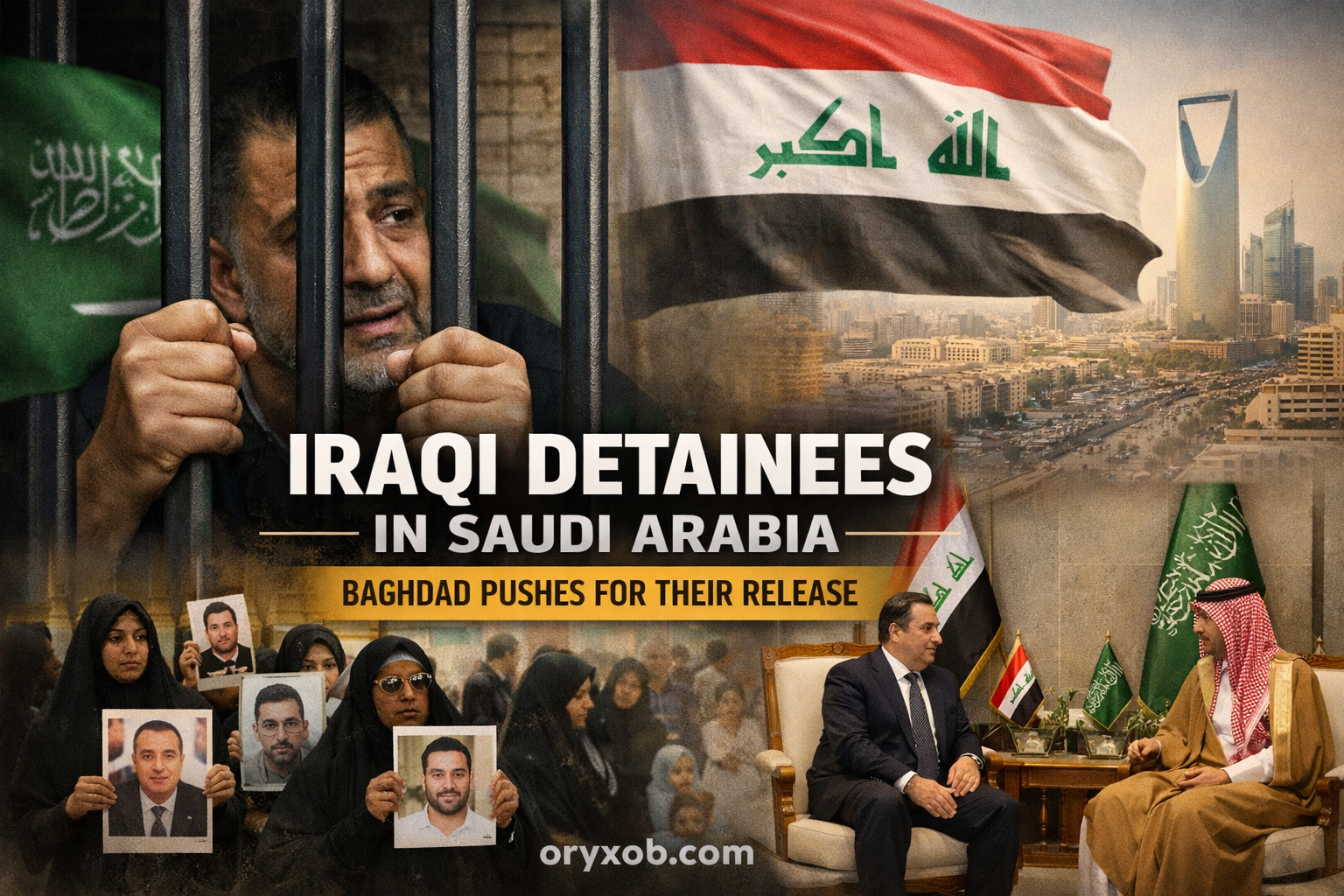
The issue of Iraqi detainees in Saudi Arabia has resurfaced as a pressing diplomatic and domestic concern, with lawmakers in Baghdad urging the government to intensify negotiations with Riyadh and provide greater transparency over the number and status of those still in custody.
Members of the Iraqi parliament have recently claimed that up to 147 Iraqis remain detained in Saudi prisons, though no consolidated official list has been publicly released. Iraqi authorities acknowledge that several detainees have been freed in stages over the past year, yet precise figures remain disputed, fuelling criticism from families and political blocs who argue that the government’s disclosures have been incomplete.
A Recurring Diplomatic File
The cases span multiple waves of detentions, many linked to the Hajj and Umrah pilgrimage seasons. During the 2024 Hajj, Iraqi officials confirmed that two Iraqi citizens had been detained in Mecca, while Iraq’s Hajj authority later referred to five separate detentions connected to alleged violations of pilgrimage regulations. Three of those individuals were subsequently released.
In subsequent months, additional cases were reported involving Iraqis allegedly detained for chanting political slogans, filming at sensitive religious sites, or publishing social media content deemed inappropriate by Saudi authorities. Saudi officials have repeatedly stressed that pilgrimage is strictly for worship and not a platform for political expression.
Named Detainees and Reported Arrest Dates
Although many cases have not been publicly detailed, several detainees have been identified in Iraqi reporting:
- Imad Al-Mosafar, a political analyst, was reportedly arrested during Hajj in early June 2024 and released on 11 June 2024.
- Walid Al-Sharifi was detained during the same period and released on 14 June 2024 after being held for several days.
- Sheikh Abdulhassan Al-Azzawi, a cleric, was reportedly arrested on 17 April 2024 while performing Umrah. His family stated that the arrest was linked to filming at Al-Baqi cemetery in Medina.
- In a separate case, five young Iraqi men were reportedly arrested on 29 September 2024 in Medina during Umrah and later transferred to Dhahban Prison.
- Iraqi lawmakers also stated that nine Iraqis detained since October 2024 were released in 2025 following diplomatic intervention.
While some of those named have since returned to Iraq, lawmakers insist that others remain in custody and that the total number is higher than officially acknowledged.
Baghdad’s Latest Diplomatic Moves
The Iraqi government has sought to demonstrate active engagement on the issue. In August 2025, Foreign Minister Fuad Hussein met his Saudi counterpart in Jeddah and formally requested the release of Iraqi detainees, describing the matter as one that directly affects bilateral relations.
Prime Minister Mohammed Shia Al-Sudani later met families of detainees in Baghdad, reaffirming the state’s responsibility to protect Iraqi citizens abroad. On 7 September 2025, the Foreign Ministry confirmed that Iraq’s embassy in Riyadh and consulate in Jeddah had been instructed to provide legal and humanitarian follow-up for those still held.
On 24 September 2025, Al-Sudani received a group of freed detainees after a delegation led by his chief of staff travelled to Riyadh. The Prime Minister urged Iraqi travellers to respect the laws and customs of host countries, while emphasising that the government would continue diplomatic efforts to secure further releases.
Transparency and Human Rights Concerns
The reported transfer of some detainees to Dhahban Prison has prompted concern among Iraqi lawmakers and human rights advocates, particularly amid broader international criticism of detention conditions in Saudi Arabia. However, specific details concerning Iraqi detainees — including formal charges, trial status, or sentencing — remain largely undisclosed in the public domain.
The absence of a definitive, publicly available register of detainees continues to complicate the matter. Families have called for clearer communication, while some MPs have warned that the issue risks becoming a recurring source of political and diplomatic strain.
For now, Iraqi officials maintain that the file remains open and under active negotiation. Yet until comprehensive figures and legal clarifications are provided, the question of Iraqi detainees in Saudi Arabia is likely to persist as a sensitive test of Baghdad’s diplomatic leverage and its commitment to protecting citizens abroad.