
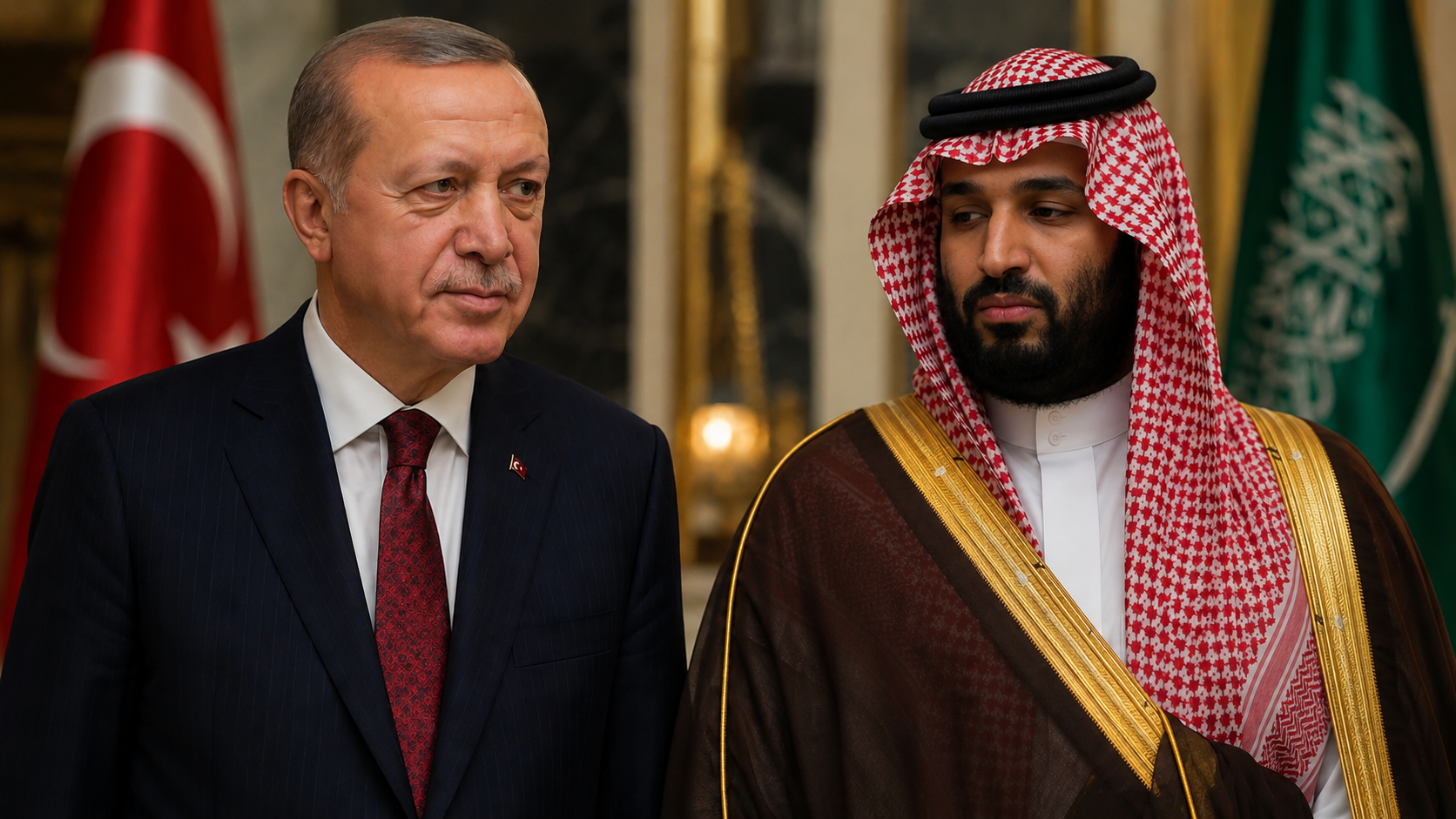
There is something almost touching about the way certain Gulf rulers reach for new friends when the old ones start looking unreliable. One moment they are buying American fighter jets and posing for photographs with presidents; the next they are signing solemn mutual-defence pacts with anyone who will take their money and smile while doing it. The latest such arrangement, the so-called Mecca Agreement between Turkey and Saudi Arabia, is being dressed up as a historic realignment of Muslim power. In reality it looks rather more like a particularly skilful piece of commercial predation.
Recep Tayyip Erdogan has spent years refining the art of selling security to the anxious. He arrives with drones that have performed admirably in various proxy conflicts, warships that look impressive in the catalogue, and a fifth-generation fighter still some distance from operational maturity. He offers technology transfer, joint production, and the warm language of Islamic solidarity. What he does not offer is any realistic prospect that Turkish soldiers will die in large numbers to defend Saudi oil facilities or royal palaces. That part of the bargain is left deliberately vague, rather like the small print on a very expensive insurance policy that covers everything except the actual catastrophe.
Mohammed bin Salman, for his part, appears to have concluded that American guarantees are no longer quite what they were. Fair enough. Washington has its own distractions, and the region has noticed. Into this vacuum steps the Turkish president, smiling, expansive, and thoroughly open for business. The Saudi side brings capital; the Turkish side brings kits, know-how, and an impressive ability to present commercial self-interest as strategic brotherhood. One need not be a cynic to observe that the flow of money is likely to be rather more reliable than the flow of troops.
The beauty of the arrangement, from Ankara’s perspective, is that it requires almost nothing irreversible. Turkey retains its NATO membership, its complicated relationship with the United States, and its freedom to calibrate involvement according to domestic politics and risk appetite. Saudi Arabia, meanwhile, acquires the comforting sensation of having purchased an additional layer of deterrence. Whether that layer will hold when missiles start flying is a question best left unexamined for as long as the invoices keep being paid.
Erdogan has form in this regard. He has sold the same combination of hardware and hope to several clients who later discovered that Turkish solidarity has carefully defined limits. The difference this time is the size of the chequebook. Saudi Arabia can afford to pay for prestige projects, localisation deals, and the warm glow of partnership. Turkey, whose defence industry has grown ambitious but remains chronically short of easy capital, is only too happy to oblige. The result is a classic transaction: one side buys reassurance, the other sells it at a healthy margin, and both parties issue communiqués about shared destiny.
Should a genuine crisis arrive—say, a direct and sustained attack on Saudi territory—the practical value of the pact will be tested rather more rigorously than its rhetoric. Turkish public opinion has never shown much enthusiasm for dying on behalf of Gulf monarchies. Erdogan’s own political base is nationalist first and internationalist a distant second. In such circumstances one can expect carefully worded statements, perhaps some intelligence sharing, and a sudden surge in further arms contracts. What one should not expect is the Turkish army marching south in any meaningful numbers.
None of this makes the deal foolish from a purely commercial standpoint. Erdogan has identified a wealthy customer who feels exposed and is prepared to spend. He is offering products that Saudi Arabia genuinely wants and that come with fewer political complications than their Western equivalents. In return he receives investment, export revenue, and the diplomatic prestige of appearing to sit at the centre of a new regional architecture. It is, in short, excellent business.
Whether it constitutes a serious strategic alliance is another matter entirely. Alliances that rest primarily on the exchange of money for hardware tend to dissolve when the money stops or the hardware proves insufficient. The Mecca Agreement may generate headlines, contracts, and a temporary sense of security in Riyadh. It is rather less likely to generate Turkish casualties on Saudi soil. Erdogan, one suspects, understands this distinction perfectly well. He has simply declined to advertise it too loudly while the Saudi chequebook remains open.