
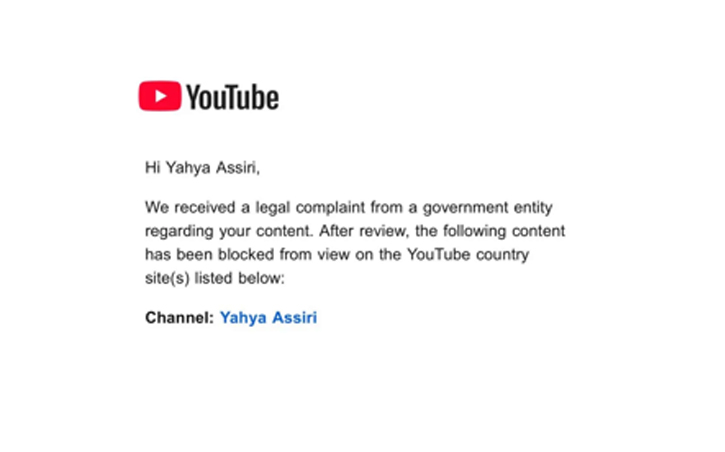
According to the European Saudi Organization for Human Rights (ESOHR), a second, more aggressive wave of repression and silencing of social media accounts has begun, targeting human rights defenders, rights organizations, Saudi dissidents, and pages covering Saudi affairs.
Since April 2026, accounts on X, Facebook, and Instagram have been receiving notifications stating that their content has been blocked and that their accounts are no longer visible inside Saudi Arabia.
In August 2026, the campaign expanded: YouTube began a widespread wave of blocking inside Saudi Arabia, affecting dozens of accounts so far. X added new accounts to its list of geographically restricted accounts and blocked alternative accounts belonging to those that were targeted in the previous wave.
These practices represent an extension of the restrictions imposed on freedom of opinion and expression within the country into the digital sphere, and contribute to depriving the public of access to independent and critical information.
Pressuring technology platforms to block the accounts of defenders and organizations is a digital extension of transnational repression.
These practices raise serious concerns regarding freedom of opinion and expression and the right to access information.
Technology companies’ compliance with blocking requests from Saudi authorities, without conducting an independent and transparent assessment consistent with international human rights standards, may amount to these companies contributing to the restriction of peaceful expression and undermining the rights to freedom of expression and access to information.
Attempts to block human rights and political content come within the broader context of dismantling independent civil society inside Saudi Arabia.