
Saudi Arabia is facing a growing challenge to its military and political influence as Yemen increases pressure on the kingdom’s western maritime routes, forcing Saudi Aramco to explore alternative arrangements for delivering crude to Asian customers. The latest developments are exposing a widening gap between Riyadh’s projection of itself as the dominant power on the Arabian Peninsula and its ability to guarantee the security of the infrastructure and shipping routes on which its economy depends.
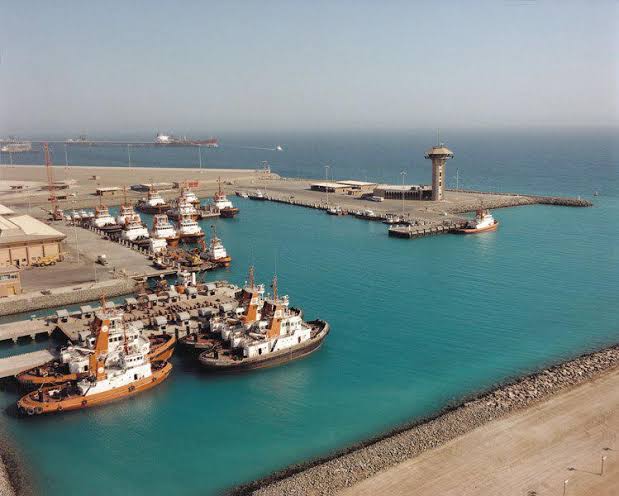
The latest warning came this week as Asian refiners sought alternatives to collecting Saudi crude from Yanbu, the kingdom’s major Red Sea export terminal. Shipowners have become increasingly reluctant to send tankers through the Red Sea and the Bab el-Mandeb because of the security risks, prompting some buyers to ask whether Saudi cargoes could instead be collected from Sidi Kerir on Egypt’s Mediterranean coast. The development is significant because it means the problem is no longer confined to the battlefield: commercial customers are beginning to adjust their behaviour because of the security environment surrounding Saudi Arabia’s own export infrastructure.
The situation is particularly uncomfortable for Riyadh because Saudi Arabia has spent enormous sums building one of the Middle East’s most sophisticated military establishments and has repeatedly presented itself as the indispensable security power of the Gulf and Arabian Peninsula. Yet the growing difficulties surrounding Yanbu demonstrate that military superiority does not automatically translate into control of the surrounding maritime environment. Yemen does not need to match Saudi Arabia’s air force, missile systems or defence budget to impose a strategic cost; it needs only to make the route sufficiently dangerous for shipowners, insurers and refiners to reconsider using it.
The consequences are already visible in the way Aramco is attempting to reorganise its exports. The company has been exploring alternative arrangements for some Asian customers, including ship-to-ship transfers near Fujairah in the UAE, while Saudi crude has increasingly been redirected through Egypt and towards the Mediterranean. The fact that buyers are considering taking possession of Saudi oil outside the kingdom’s Red Sea export corridor is particularly revealing, because the entire purpose of Saudi Arabia’s extensive export infrastructure is to provide customers with reliable access to its crude.
The pressure comes after years in which Saudi Arabia sought to reshape the balance of power in Yemen through military intervention, political pressure and extensive financial and diplomatic support for its allies. Riyadh entered the Yemen war in 2015 with the expectation that its superior resources and military capabilities would eventually force a favourable political settlement and prevent Yemen from becoming a long-term strategic threat. More than a decade later, Yemen remains capable of projecting pressure towards Saudi territory and maritime infrastructure, while Riyadh is increasingly being forced to adapt its own security and commercial calculations around developments it cannot fully control.
This represents a significant reversal in the strategic relationship between the two countries. Saudi Arabia once attempted to determine the political and military trajectory of Yemen; today, developments originating in Yemen are affecting Saudi Arabia’s shipping routes, oil logistics and relations with some of its most important customers. The imbalance in conventional military strength remains enormous, but the relevant measure of power in this confrontation is increasingly the ability to impose costs on the other side. By that measure, Yemen has acquired leverage that is disproportionate to its economic resources.
The vulnerability is amplified by the geography of Saudi oil exports. The kingdom has traditionally relied on a combination of routes through the Strait of Hormuz and the Red Sea, while its pipelines and western export terminals have been designed to provide alternatives when one route is disrupted. The worsening security environment means that these alternatives are becoming less straightforward. If shipping companies are reluctant to enter the Red Sea, the existence of a Saudi export terminal there does not by itself guarantee that crude can move efficiently to Asian customers.
The commercial consequences are also becoming harder to ignore. Longer voyages, higher insurance premiums, additional transfers between vessels and the use of alternative terminals all increase the cost and complexity of moving Saudi crude. Saudi Arabia remains fully capable of producing and selling enormous quantities of oil, but the latest developments show that the process of transporting that oil to its customers can no longer be treated as a routine logistical exercise. The more frequently Aramco has to reroute cargoes or negotiate exceptional arrangements, the greater the pressure on the reliability that has traditionally been one of Saudi oil’s greatest strategic advantages.
The developments also raise questions about the effectiveness of Riyadh’s broader regional strategy. Saudi Arabia has invested heavily in advanced weapons, defence systems, diplomatic partnerships and a foreign-policy campaign designed to establish the kingdom as the central power in the Middle East. Yet its difficulties in securing the Red Sea corridor demonstrate the limits of that approach when confronted with an adversary operating through asymmetric means and benefiting from Yemen’s strategic position beside one of the world’s most important maritime chokepoints.
The significance of the current situation therefore extends beyond individual attacks or temporary disruptions. Saudi Arabia still possesses vastly greater wealth, military capability and conventional power than Yemen, and there is no realistic comparison between the two countries’ resources. What has changed is the ability of Yemen to exploit geography and asymmetric pressure in ways that force the much stronger Saudi state to spend more, reroute more and negotiate more simply to maintain the flow of its own exports.
For Riyadh, this is an increasingly uncomfortable form of strategic exposure. The kingdom’s power remains substantial, but its experience in the Red Sea shows that possessing overwhelming military capabilities does not necessarily mean being able to impose security on its immediate neighbourhood. When Asian refiners begin looking for ways to collect Saudi crude outside a Saudi-controlled maritime route, the issue is no longer merely whether Saudi Arabia can defeat an adversary militarily. It is whether the kingdom can still guarantee the economic and strategic conditions that have allowed it to project itself as the dominant power of the region.
The emerging picture is therefore one of a Saudi Arabia that remains immensely powerful but is finding its influence increasingly constrained by developments it cannot resolve through military superiority alone. Yemen has demonstrated that a state with far fewer resources can nevertheless create pressure that reaches into Saudi Arabia’s energy trade, maritime security and international commercial relationships. For a kingdom whose regional strategy has long rested on the assumption of overwhelming superiority, that is a far more serious warning than any single military incident.