
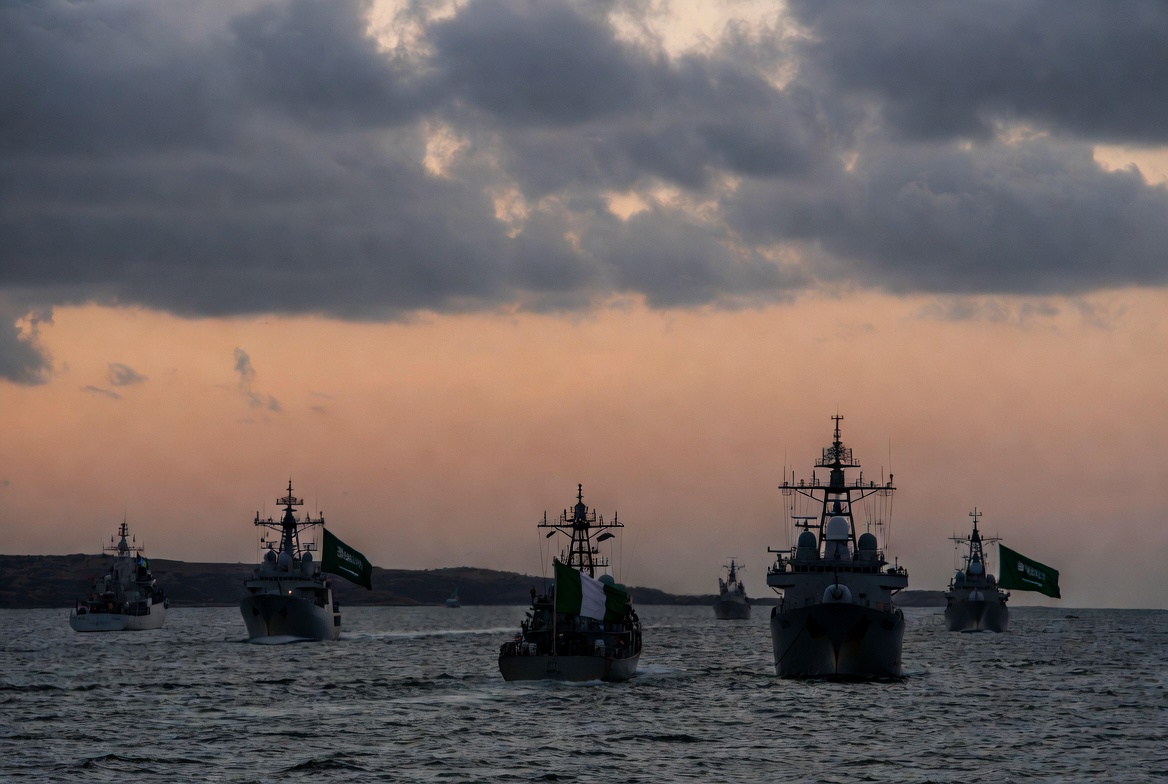
When Abuja quietly allowed Nigeria’s name to be appended to the Saudi-led Multinational Maritime Defence Alliance, the official statements arrived wrapped in the usual empty phrases: freedom of navigation, shared responsibility, regional stability. One almost admires the consistency of the hypocrisy. The same government that cannot guarantee the security of Nigerian waters in the Gulf of Guinea, that watches oil theft and piracy flourish on its own doorstep, suddenly discovers a passionate interest in the Red Sea and Bab el-Mandeb. The reason, of course, has nothing to do with principle and everything to do with the ledger.
This is not collective security. It is rent-seeking dressed up as strategy. Saudi Arabia remains a significant employer of Nigerian labour and a potential source of investment and soft loans. By lending our flag to a Saudi problem, the government calculates that goodwill, contracts and remittances will flow more freely. The Houthis’ maritime campaign was directed at Saudi vessels and Saudi energy exports. Other nations have suffered disruption, but the declared target and the primary victim remain the Kingdom. Nigeria has no direct quarrel in that confrontation. We have no strategic interest in turning a bilateral Saudi difficulty into a multilateral liability that now carries our name.
Former security analysts and ordinary Nigerians have long understood that formal military alignments are dangerous precisely because they convert other people’s wars into our own. To join this alliance is to volunteer Nigerian prestige for a fight that belongs to Riyadh. It risks exposing us to retaliatory pressure from actors with whom we have maintained careful distance. The Red Sea may be a global waterway, but this particular confrontation is still, in essence, a Saudi one. Entering it for Riyadh’s sake looks less like defence of international order and more like paid endorsement.
Call it what it is: governmental mercenarism, complete in every particular. The state has hired out the national name for expected financial return. There is no higher purpose, no genuine threat to Nigerian shipping that requires this step, no independent assessment of national interest beyond the bilateral balance sheet with Riyadh. The language of “shared international responsibility” is merely the polite cover for something closer to transactional loyalty. When the cheque is large enough, principle becomes negotiable.
This is an insult to the dignity of Nigerians. A country of more than two hundred million people, with its own complex security challenges and a proud tradition of non-alignment, does not exist to provide decorative signatures for Gulf monarchies. Our foreign policy should not be available for hire. The government has treated the Nigerian flag as a commodity to be traded for economic favour. That decision diminishes every citizen who still believes the republic is more than a brokerage firm.
Whether this quiet rebellion of public scepticism will harden into sustained pressure remains to be seen. The government will continue to insist the move is pragmatic and limited. Yet the existence of the criticism itself matters. It shows that many Nigerians are no longer prepared to accept Saudi-led initiatives at the valuation Riyadh and its partners assign them. For a nation whose diplomacy once traded on careful balance and independent judgement, the readiness to sell the national name so cheaply may prove more damaging than the alliance itself.
The official story is that we are defending free navigation. The real story is simpler and uglier: we have rented our signature.