
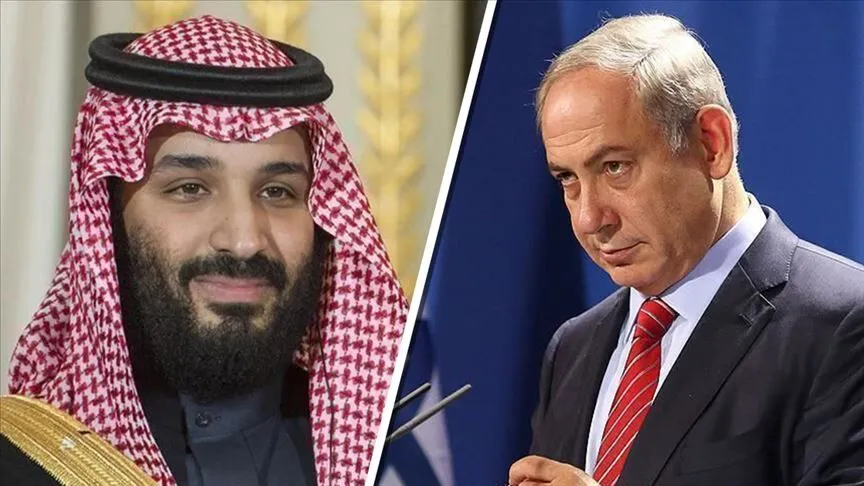
In the hallowed, albeit increasingly cynical, halls of international diplomacy, the discourse surrounding Saudi Arabia’s potential normalisation with Israel has become a masterclass in obfuscation. To the casual observer, Riyadh maintains a stance of principled defiance, insisting upon a “path to a Palestinian state” as an immutable condition for any rapprochement. Yet, beneath this veneer of high-minded rhetoric lies a more nuanced—and arguably more transactional—reality that increasingly resembles a retreat from the very red lines the Kingdom once proclaimed.
The choreography of this “creeping normalisation” is as predictable as it is unsettling. Before the cataclysmic events of late 2023, the Kingdom was actively cultivating an environment conducive to integration. Crown Prince Mohammed bin Salman, with characteristic confidence, spoke of the two nations getting “closer every day.” Even then, the demands placed upon Israel were whisper-thin, requiring only modest concessions to the Palestinian cause. Since the subsequent regional conflagration, the messaging has been forced to shift to accommodate a seething Arab public—a public for whom polling consistently suggests that the overwhelming majority view normal relations and peace with Israel as an unequivocally negative step.
The regime’s predicament is clear: how to pursue a strategic realignment that the street views as an existential betrayal while simultaneously maintaining the mantle of regional leadership? The answer, it seems, is the constant revision of terms. We have moved from the robust clarity of the 2002 Arab Peace Initiative—which demanded a full withdrawal from occupied territories—to the current, nebulous “time-bound path” toward a future state. This is not diplomacy; it is a tactical retreat, a gradual dilution of conditions intended to make the inevitable palatable.
When Israeli President Isaac Herzog recently appeared on Saudi-owned Al Arabiya to declare that peace with Riyadh is his “dream,” he was not merely expressing a personal sentiment; he was signalling the persistence of an Israeli establishment that sees the Saudi regime as a willing, if cautious, dance partner. While Riyadh’s official apparatus occasionally rebukes Israeli policy—or even sporadically leaks reports about demanding political shifts within Israel—the trajectory remains clear. The regime is no longer arguing if they will integrate with Israel, but rather how they can justify the abandonment of a historic cause to a populace that remains firmly, and rightfully, opposed.
The tragedy of this manoeuvre is that it treats Palestinian statehood not as an inalienable right, but as a negotiable commodity—a bargaining chip to be bartered for security guarantees, advanced armaments, or regional status. By shifting the goalposts, the Saudi leadership is not protecting Palestinian interests; it is merely managing the pace of their divestment.
In the high-stakes poker game of Middle Eastern geopolitics, Riyadh is playing a dangerous hand. It believes it can compartmentalise its foreign policy, separating its economic and security ambitions from the pulse of its own people. But legitimacy is a finite resource. By drifting toward an arrangement that is fundamentally at odds with the collective conscience of the Arab world, the regime risks a profound, long-term alienation from its own base.
The promise of a “path toward a state” is a mirage, one that dissipates the closer one approaches it. For the people of the region, the writing is on the wall: the “conditions” will continue to be eroded, the rhetoric will continue to soften, and the goal of a free and sovereign Palestine will continue to be sacrificed on the altar of regional realpolitik. In this, the Saudi regime is not a defender of a cause; it is a witness to its quiet, calculated disposal.
As the Saudi leadership continues to shift its stance on normalisation, how do you foresee the long-term impact of this diplomatic pivot on the Kingdom’s internal stability and its standing within the wider Arab world?